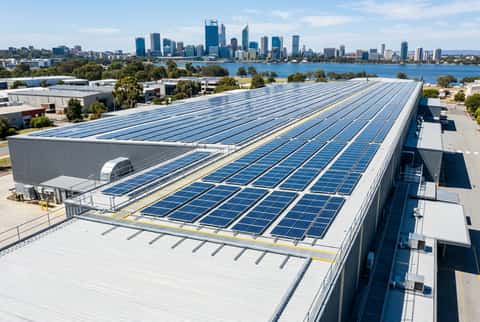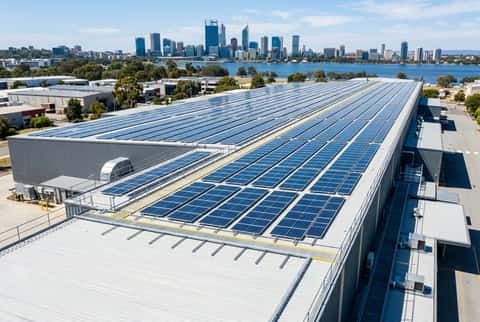
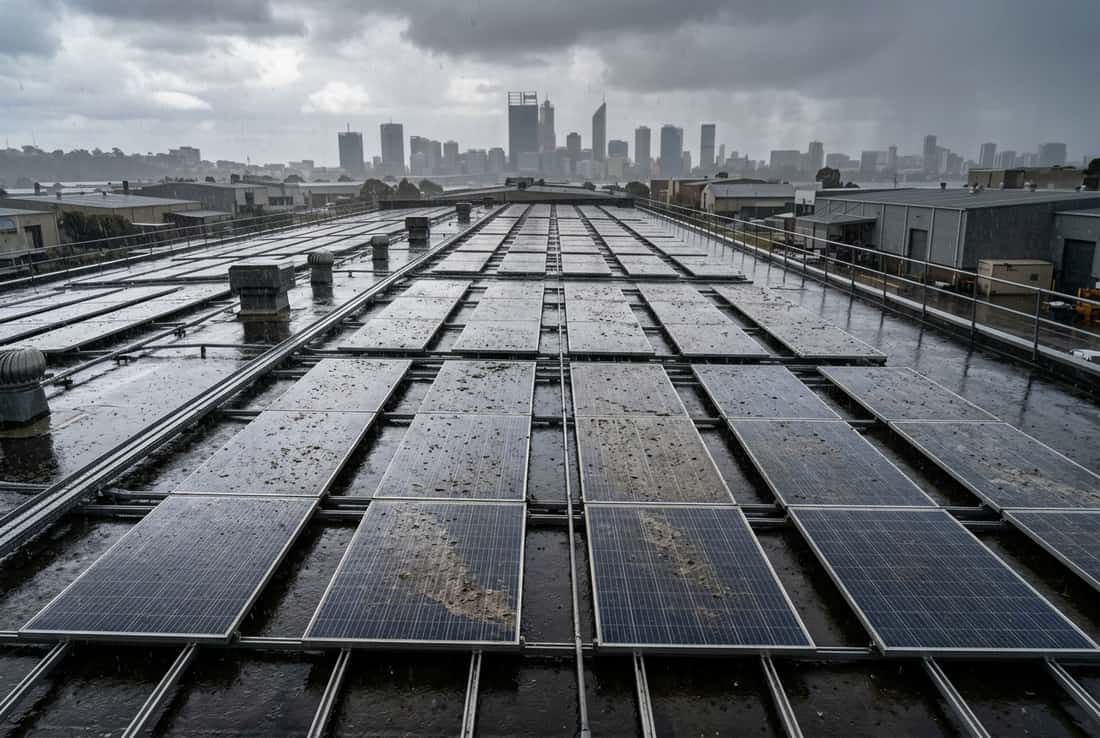
Rain helps rinse some loose surface dust, but it is not enough to treat as a proper cleaning plan for most commercial solar panels in Perth. That is one of the biggest assumptions businesses make. Because the panels sit outside in all weather, it is easy to think a decent shower will wash away whatever has settled on the glass. In practice, light or moderate rainfall often leaves residue behind and can make spotting more noticeable once the surface dries again.
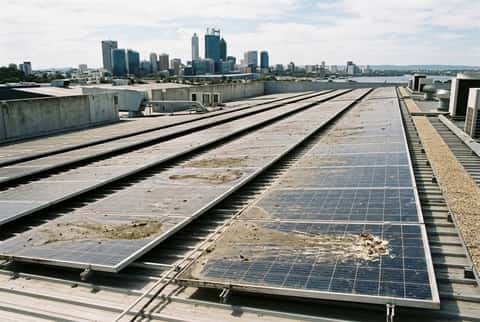
Commercial arrays usually collect more than soft dust. They pick up bird droppings, grime from surrounding traffic or industrial activity, and a film that builds over long dry spells. Rain does not reliably remove those heavier marks. On large roof spaces, it also does not always hit every section evenly. That means a business can come out of winter or a run of showers with panels that still look flat, patchy, and overdue for proper attention.
Why rain is not a complete cleaning solution
Rain does not remove stubborn contamination
If the panels are carrying bird droppings, stuck-on grime, or residue that has been sitting there for weeks, ordinary rain is unlikely to shift it properly. It may soften some dirt, but that is very different from a professional clean that is designed to remove contamination rather than just wet the surface.
Rain can leave marks behind
Perth businesses often notice that after light rain the panels do not actually look cleaner. They sometimes look worse. That is because water can move dirt around and then dry into spotting or streaking instead of leaving a uniformly clear surface.
Commercial roofs do not always rinse evenly
A broad roof with different pitches, drainage points, roof plant, and edge exposure can end up with uneven results after rain. Some sections may look improved. Others may still be carrying visible grime. That patchiness is common on larger arrays and one reason weather alone is not a dependable upkeep method.
Short rain events are particularly unreliable
A brief shower is enough to wet the glass but not enough to remove what is actually stuck to it. Businesses then assume nature has done the job when the roof really just needs proper cleaning.
What Perth conditions do to commercial arrays
Perth gets plenty of sunshine, which is excellent for solar, but it also gets long dry periods where dust and residue have time to build steadily. That is especially true on commercial sites with more open exposure, nearby roads, or industrial surroundings.
On some sites, wind-blown dust becomes the main issue. On others, bird activity creates the biggest visible problem. Closer to the coast, salt can become part of the mix. The exact blend changes by location, but the key point stays the same: the roof is collecting contamination faster than the rain is removing it.
That is why businesses should not treat rainfall as a maintenance schedule. It is a weather event, not a cleaning standard. Rain also does nothing to give a business certainty. Management cannot plan around it in the same way it can plan around a real maintenance booking.
When professional cleaning makes sense
After visible residue has built up
If the panels are clearly dusty, stained, or carrying marks that remain after rain, it is usually time for a proper clean. Waiting for another shower rarely changes that.
When the roof needs to match the rest of the site
Commercial properties that care about presentation do not usually leave obvious grime on front glazing, entry points, or signage. The solar array should be treated the same way. If the panels look flat and neglected, professional cleaning is the straightforward answer.
When businesses want a repeatable standard
A cleaning plan gives site managers something rain never can: consistency. Instead of hoping the weather does enough, the business knows the roof is being maintained on purpose.
When patchiness is becoming obvious
If certain sections repeatedly look worse than others, it is a sign that rainfall is not delivering an even result and the array needs a proper reset.
The local commercial picture in Perth
Purified Group’s own solar cleaning content refers to common local causes of dirty panels such as dust, bird droppings, and coastal salt residue, and its live site presents separate pages for multiple commercial and industrial areas. That matters because the answer is not just theoretical. Businesses across Perth are dealing with conditions that make routine professional cleaning more practical than relying on weather.
The issue is not whether rain touches the panels. It is whether it leaves them genuinely clean enough to maintain the standard of the system and the property. Most of the time, the honest answer is no. Rain may help a little. It is just not enough to be the plan.
For commercial sites that already want a cleaner, smarter-looking property, relying on rainfall is simply too loose an approach to keep the roof at a consistent standard.
Rain helps a little. It does not replace proper cleaning
If your commercial array still looks marked, patchy, or dull after rain, that is usually the clearest sign that weather alone is not enough. A proper clean gives the roof a reliable reset and helps the system look better maintained.
For Perth service information, visit Commercial Solar Panel Cleaning or return to the Purified Group homepage. If your business is in a high-exposure commercial area, see the local pages for Canning Vale and Jandakot.
Why businesses should not rely on appearance alone
One reason this myth survives is that the panels can still look passable from the ground after rain, especially on higher roofs. But passable is not the same as properly clean. Commercial properties that care about maintenance standards usually need more than that.
If the roof is part of the image the business wants to project, then a vague sense that the rain may have helped is not a strong enough standard. A planned clean gives certainty, consistency, and a better result than waiting to see what the weather does next.
That matters even more on larger roofs where build-up can be spread across a wide area. A few cleaner-looking sections after rain can make the array seem better than it really is. Once the surface dries and the residue remains, the business is back where it started.
A better question than “did it rain?”
A more useful question is whether the panels actually look clean enough for the standard of the site. If the answer is no, then the fact that it rained recently does not really change the decision.
That is the better commercial mindset in Perth. Weather may assist slightly, but maintenance should still be planned on purpose. Businesses that treat solar cleaning that way generally find it easier to keep the roof in step with the rest of the property rather than hoping nature will handle it for them.
Frequently Asked Questions
Does any amount of rain clean a commercial array properly?
Light rain mostly redistributes surface dust rather than removing it, and it does nothing about oil residue, bird fouling or bonded industrial grime that needs mechanical removal.
Why doesn't Perth's dry climate rely on rain for panel cleaning?
Perth's long dry summers mean months can pass between meaningful rain events, giving industrial fouling plenty of time to bond onto the glass before any natural washing occurs.
What does actually remove bonded commercial fouling?
A proper pure water clean, typically via the SolarCleano F1 robot on larger arrays, physically lifts the bonded layer that rain alone cannot shift.