Serving the Perth CBD Office and High-Rise Precinct · Perth WA

Commercial Cleaning Services in the Perth CBD

Solar panel cleaning, facade and atrium window cleaning, and pressure cleaning for the CBD's office towers, strata-managed commercial buildings, hotels, and mixed-use developments between the Terrace, Wellington Street, and the Barrack Street end of the city.
Commercial solar panel cleaning for podium, plant-deck, and carpark-roof arrays
Pure water window cleaning for ground-plane glazing, lobbies, atriums, and awnings
Pressure cleaning for entries, loading docks, and undercover carparks
SWMS-ready · Fully insured · After-hours and weekend access
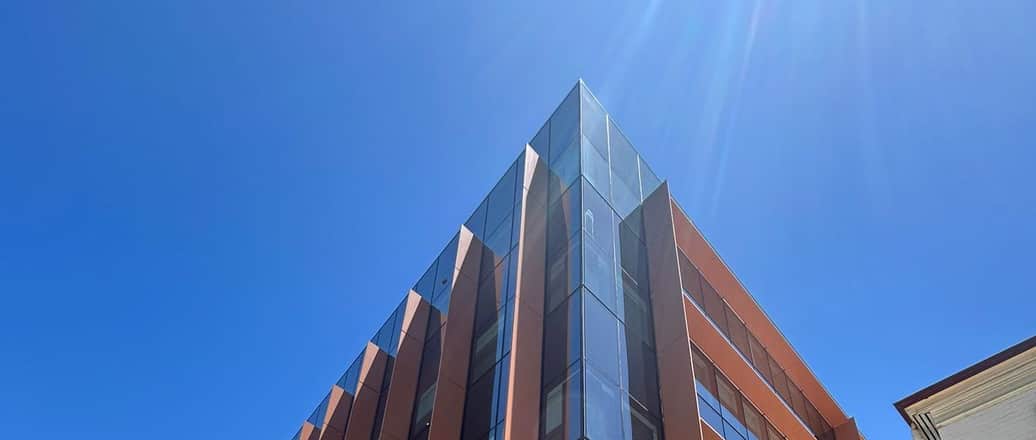
Glazed and bronze-finned commercial office tower rising against clear sky in Perth, WA

Local to the Perth CBD

In the CBD, the cleaning question is rarely what needs doing. It is how anyone gets to it

Every other commercial precinct in Perth is a scheduling problem. The CBD is an access problem. A warehouse roof in Welshpool is a ladder and a safe walkway. The same array on a city podium sits behind a controlled lift, a plant-deck hatch, an induction, a permit, and a building manager who needs 48 hours notice before anyone touches the roof. The work itself is the straightforward part.

That shapes everything about how a CBD job runs. Solar arrays in the city are rarely the big uninterrupted expanses found in the industrial suburbs. They sit on podium roofs, plant decks, and carpark structures, threaded between air handling units, exhaust risers, lift overruns, and communications gear, and they are frequently overshadowed for part of the day by the tower next door. Small, congested, partly shaded arrays lose a larger proportion of their output to soiling than open industrial arrays do, because they have less generation to spare in the first place.

Purified Group works across the Perth CBD for strata companies, facilities managers, and building owners, providing scheduled solar panel cleaning, pure-water window cleaning for the ground plane and atrium glazing, and pressure cleaning for entries, loading docks, and undercover carparks, all delivered around building access rules rather than in spite of them.
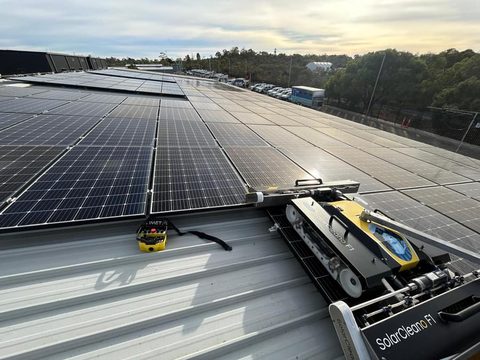
Purified Group technician operating a rooftop solar panel cleaning robot on a Perth commercial building at dusk

Roof access runs through building management, inductions, and permits, not a ladder off the back of a van
Podium and plant-deck arrays are small, congested, and partly overshadowed, so every percentage point of output matters
Traffic film, brake dust, and construction dust from adjacent sites bond to glass and panels faster than suburban soiling
Bird fouling on ledges, awnings, and panel edges is a persistent city problem, not a seasonal one
Pedestrian footfall means ground-plane work needs exclusion zones, wet-floor management, and quiet hours
The CBD's Commercial Challenge

Why City Buildings Are a Different Job to Anything in the Industrial Suburbs

A city building has more stakeholders than surfaces. A single clean can involve the strata company, the building manager, a tenant's own facilities team, and a contractor management system that will not issue a permit until insurance, SWMS, and inductions are all current. Contractors who treat that as paperwork to be argued with do not get invited back, and buildings end up cycling through suppliers instead of maintaining a standard.

The physical conditions are unforgiving too. Ground-plane glazing takes traffic film and brake dust at street level, awnings and entry canopies collect bird fouling, and any neighbouring construction site coats the lot in fine dust that sets hard after the first rain. On the roof, the same particulate settles onto arrays that are already working at a disadvantage from overshadowing, so soiling losses land on generation the building can least afford to lose.


How We Work in the CBD

Built Around Building Management, Tenants, and the Access Rules You Already Have

We work to your building's process rather than asking it to bend around ours. That means completing the contractor induction before the first visit, submitting SWMS for roof and height access ahead of the permit, providing certificates of currency for your contractor management system, and booking roof access through building management with the notice your building requires.

Timing follows the building's rhythm. Lobby and ground-plane glazing is cleaned before the morning peak or after close, so tenants and visitors never meet a wet floor at 9am. Roof and plant-deck work is scheduled when lift access is quiet and other trades are off the deck. Pure water cleaning leaves no detergent residue on glass or panels, which matters more in the city than anywhere else, because a residue layer in a high-particulate environment simply pulls the next round of grime back on faster.

1
Contractor inductions completed and SWMS submitted before the first site visit
2
Roof and plant-deck access booked through building management, with the notice period your building sets
3
After-hours and weekend work so lobbies, entries, and walkways stay clear during trading hours
4
Documented service records and before/after photography for strata reporting and owner meetings
5
One point of contact across a portfolio, so multiple city buildings run to one standard

Common Questions

Frequently Asked Questions About
Commercial Cleaning in the Perth CBD

Does Purified Group service commercial buildings in the Perth CBD?
Yes. We work across the CBD for strata companies, facilities managers, and building owners, covering office towers, strata-managed commercial buildings, hotels, mixed-use developments, retail tenancies at the ground plane, and the carpark and podium structures attached to them, from St Georges Terrace through to the Wellington Street end of the city.
Do you inspect solar panels before quoting or cleaning?
Yes. Every commercial solar job starts with a visual inspection of the array. On CBD roofs this matters more than usual, because city arrays share plant decks and podium roofs with air handling units, chillers, and communications gear. The inspection covers soiling level, panel damage, mounting condition, and any new plant or structure that has started overshadowing the array since it was installed. You get accurate pricing and an honest read on the array's condition before any work is booked.
What does PV stand for?
PV stands for photovoltaic, the technology that converts sunlight directly into electricity. The term comes from "photo" meaning light and "voltaic" meaning electricity. When sunlight reaches the PV cells inside a panel, typically made from silicon, an electric current is generated. A PV system refers to the complete installation including panels and inverter, while a PV array refers to a group of panels working together. PV is the standard industry term in commercial and building services contexts.
How do you handle building access, inductions, and permits in the CBD?
We work to the building's own process. That means completing the contractor induction before the first visit, submitting Safe Work Method Statements for roof and height access ahead of any permit being issued, providing certificates of currency for your contractor management system, and booking roof or plant-deck access through building management with whatever notice period the building requires. We would rather spend a week on the paperwork before the first clean than turn up and be refused at the lift.
Can you work after hours so tenants are not disrupted?
Yes, and in the CBD it is usually the default rather than the exception. Lobby, entry, and ground-plane glazing is typically cleaned before the morning peak or after close, so no tenant or visitor meets a wet floor during trading hours. Pressure cleaning of entries, footpath aprons, and loading docks is generally scheduled for evenings or weekends. Roof and plant-deck work is booked when lift access is quiet and other trades are off the deck.
Do you clean the full facade of a high-rise?
No, and we will tell you that up front. Full facade access on a high-rise is a rope access or building maintenance unit scope, tied to the building's own anchor and davit systems. What we cover is the ground plane and accessible-height glazing: entry glass, lobby and atrium glazing, awnings, canopies, revolving door surrounds, and the first storeys reachable with pure water pole systems or an elevated work platform. That is the glass every tenant and visitor actually stands next to, and it is the glass that shows traffic film and fingerprints first.
How often should a Perth CBD commercial solar array be cleaned?
For most CBD buildings we recommend cleaning every 3 to 6 months. City arrays take traffic film, brake dust, and construction dust from adjacent sites, all of which bond harder to glass than rural or suburban dust. Buildings sitting next to an active construction site usually need a shorter interval while the works continue, and often a one-off clean once the site finishes.
Why does soiling matter more on a small city array than a large industrial one?
Because a city array has no headroom. Podium, plant-deck, and carpark-roof arrays are usually modest, often between 20kW and 100kW, and they are frequently overshadowed for part of the day by the tower above or the building next door. They are generating less than their nameplate to begin with, so a soiling loss comes straight off output the building was already counting on for peak demand or its energy rating.
Do you work with strata companies and facilities managers?
Yes, that is the majority of our CBD work. We are used to dealing with a building manager for access, a facilities management team for scheduling and documentation, and a strata company for approvals and reporting. We provide a documented service record after every visit, with before and after photography, in a form that can go straight into a strata report or an owners meeting pack.
Can you service several city buildings under one arrangement?
Yes. Where a strata company or facilities manager holds several CBD buildings, we can run them under one agreement with one point of contact, one set of insurance and SWMS documentation, and a consistent standard and reporting format across the portfolio. It removes the administrative overhead of inducting and chasing a different contractor for each address.
What does bird fouling do to city glass and panels?
In the CBD it is a constant rather than a seasonal problem. Ledges, awnings, canopies, and the raised edges of panel frames all collect it. On glass it etches if it is left through a hot week. On solar panels it does something worse than general dust: a concentrated deposit can shade a cell or a whole string, and the loss is out of proportion to the area covered. It also bakes hard, so it needs proper cleaning rather than a rinse.
How does nearby construction affect a CBD building's cleaning schedule?
Significantly. Fine construction dust settles across glass, awnings, and rooftop arrays, and the first rain sets it into a film that ordinary rinsing will not shift. Buildings adjacent to active works usually need a shorter cleaning interval for the duration, and a thorough clean once the site is finished. We will tell you if that is what your building needs rather than holding you to an interval that no longer fits.
Do you carry insurance for CBD commercial work?
Yes. We carry full public liability insurance for commercial site work and can provide certificates of currency on request for site inductions, contractor management systems, and strata compliance requirements. Documentation goes in before the first visit, not on the morning of it.
Do you provide SWMS for roof and height access in the city?
Yes. Safe Work Method Statements are provided for roof access, plant-deck work, and elevated work platform use, covering fall protection, equipment, exclusion zones, and emergency procedures. They are written to be accepted by building management and contractor management systems, and we submit them ahead of the permit rather than in response to a request on the day.
How do you manage pedestrians during ground-level cleaning?
With exclusion zones, signage, wet-floor management, and timing. Footpath aprons, entries, and forecourts in the CBD carry constant foot traffic, so this work is planned for quiet hours and set up so pedestrians are routed around a controlled area rather than walking through a wet zone. Where a footpath needs to be partly closed, that is agreed with building management in advance.
Can you clean undercover carparks and loading docks?
Yes. Undercover carpark floors and ramps, loading docks, and bin bays are some of the highest-value cleans in a city building and the most commonly deferred. We plan these around water capture and drainage, since anything mobilised on a carpark floor has somewhere to go, and we schedule them for periods when vehicle movements are lowest.
What does commercial cleaning in the Perth CBD typically cost?
It depends on the scope, the access method, and the frequency, and the access method is usually the larger variable in the city rather than the surface area. We quote in writing after a free site assessment, and we separate what is reachable from the ground plane from anything that needs specialist access, so you can see exactly what you are paying for and what sits outside our scope.
Do you use pure water technology on city buildings?
Yes. All of our window and solar cleaning uses a pure water reverse osmosis system delivering water at or near 0 parts per million dissolved solids. It leaves no detergent residue, which matters more in the CBD than anywhere else: in a high-particulate environment a residue film pulls the next round of traffic dust straight back onto the surface, so residue-free cleaning holds visibly longer between visits.
What areas near the Perth CBD do you also service?
We work across the surrounding city fringe including West Perth, East Perth, Northbridge, Highgate, Mount Lawley, South Perth, and Victoria Park, along with the wider commercial corridor. If your building is nearby and not listed, contact us and we will tell you honestly whether we can service it on a schedule that suits.

Commercial Cleaning in the Perth CBD: What Strata Companies and Facilities Managers Need to Know

The Perth CBD is the densest commercial building stock in Western Australia, and almost none of it is owner-occupied in the way a suburban warehouse is. Buildings between St Georges Terrace, Hay Street, Murray Street, and Wellington Street are typically held by institutional owners or strata schemes, run day to day by a building manager, and maintained through contractors engaged by a facilities management team. That structure, more than the buildings themselves, determines how commercial solar panel (PV) cleaning, facade cleaning, and surface cleaning actually get delivered in the city.

Solar in the CBD looks nothing like solar in Welshpool or Bibra Lake. City arrays are constrained by the roof they sit on: plant decks crowded with air handling units, chillers, lift overruns, and communications equipment, podium roofs shaded for part of the day by the tower above or the neighbouring building, and carpark structures where the array shares space with ventilation gear. These installations are usually modest in size, often between 20kW and 100kW, and they exist to shave peak demand and support a building's energy rating rather than to run an industrial process. That makes cleanliness disproportionately valuable: a smaller array with partial overshadowing has no headroom, so any soiling loss comes straight off generation the building was counting on. Every Purified Group solar visit starts with a visual inspection of the array, and on congested city roofs that inspection matters twice over, because it also picks up shading from newly installed plant, cable damage, and mounting issues that a quick roof walk by a general maintenance contractor will miss.

Window cleaning in the city divides into two jobs that are often confused when a building goes to quote. Full facade access on a high-rise is a rope access or building maintenance unit scope, driven by the building's own anchor and davit systems. The other job, the one that shapes how a building is actually perceived at street level, is the ground plane: entry glazing, lobby and atrium glass, awnings, canopies, revolving door surrounds, and the first few storeys reachable with pure water pole systems. That is where traffic film, brake dust, fingerprints, and bird fouling accumulate, and it is the glass every tenant and visitor stands next to. Purified Group services the ground plane and accessible-height glazing with pure water reach-and-wash systems and elevated work platforms where required, and we are straightforward about where our scope ends and a rope access contractor's begins.

Pressure cleaning in a CBD building concentrates on the places where the public meets the property: entries and forecourts, footpath aprons, loading docks, bin bays, and undercover carpark floors and ramps. Each of these carries a different risk. Ground-level work in a pedestrian environment needs exclusion zones and wet-floor management rather than just a machine and a hose. Undercover carparks need water capture and drainage awareness, since anything mobilised on a carpark floor has somewhere to go. Loading docks and bin bays are usually the highest-value clean in the building and the one most often deferred, because they are the least visible to the owners and the most visible to the tenants who use them daily.

For strata companies and facilities managers, the practical benefit of a single contractor across solar, glass, and hard surfaces is administrative rather than technical: one induction, one set of insurances and SWMS in your contractor management system, one point of contact, and one service record per visit that can go straight into a strata report or an owners meeting pack. Purified Group works across the CBD and the surrounding city fringe, including West Perth, East Perth, Northbridge, and the Terrace end of the city, and we are happy to quote a single building or a portfolio held under one management. Contact us for a free site assessment and a written quote.


Get Started Today

Get a Free Quote for Your Perth CBD Building

We'll respond promptly with an honest site assessment and a clear written quote, including what we can reach from the ground plane and what needs specialist access. No obligation, no pressure.

  • Free written site quotes, no obligation
  • Fully insured, SWMS-ready commercial team
  • Pure water technology, no chemical residue
  • Serving the Perth CBD and the surrounding city fringe
5.00★ Rating 50+ Google Reviews from Perth businesses
10+ Years Experience Serving Perth homes and businesses since 2014
Fully Insured Team Inducted, SWMS-ready technicians on every CBD building