
Ask three companies how long nano coating lasts on windows and you can easily get three answers that barely overlap. One says a year. One says three to five. One prints ten on the brochure. None of them is necessarily lying, which is the confusing part.
The honest answer is that the coating itself does not have a fixed expiry date. It has a rate of wear, and that rate depends on how it was applied, what the glass is exposed to, what lands on it, and how it gets cleaned afterwards. Change any of those and the same product on the same house can last two years or eight. Here is how each variable plays out in Perth specifically.
What the coating actually is
Nano coating (sometimes sold as glass sealant, hydrophobic coating or ceramic coating for glass) bonds to the surface of the glass and fills in the microscopic pores and irregularities that ordinary glass has. Those pores are where dirt, salt and mineral deposits get a grip. Fill them in and you get a smoother, water repellent surface. Rain beads up and runs off rather than spreading out, drying and leaving whatever it was carrying behind.
Two things follow from that. First, the benefit is real but it is not magic: coated glass still gets dirty, it just holds less and releases it more easily. Second, the coating is sacrificial. It is a thin layer that sits on the outside of everything and takes the abuse. Over time it thins, and eventually the glass underneath is exposed again. Lifespan is really a question of how fast that thinning happens.
Application quality is the biggest single factor
This is the variable that explains most of the gap between the optimistic and pessimistic numbers, and it has nothing to do with which product is in the bottle.
A coating bonds to clean glass. If there is any film left on the surface, old mineral scale, silicone overspray, builder's residue, road grime, the coating bonds to that instead, and it leaves with it. Proper preparation means the glass is decontaminated and, where needed, mechanically polished to remove deposits that washing alone will not shift. That takes time, and time is where corners get cut.
Application matters too. Coatings have a working window and require even coverage with the excess removed correctly. Applied too thick, too thin, in direct summer sun, or onto glass that is still damp, and the result underperforms from day one. A well prepared and well applied coating on the same window as a rushed one can last several times longer. So when a seller quotes a lifespan, they are quoting their best case under controlled conditions. What you get depends on the person holding the applicator.
Exposure: which windows, which direction, how close to the coast
Nothing wears a coating faster than weather, and Perth supplies plenty of it.
Ultraviolet exposure is the slow one. Glass facing north and west copes with hours of hard, direct summer sun, and that constant energy gradually breaks down the coating. The same coating on a south facing window under a wide eave sees a fraction of that and will comfortably outlast it.
Salt and wind are the fast ones. Coastal suburbs get a steady load of airborne salt, and the afternoon sea breeze carries fine sand with it. Sand on glass is an abrasive, and a windy afternoon is effectively a very light sandblasting of every exposed pane. Homes in Scarborough, Cottesloe or Hillarys should expect noticeably shorter coating life on seaward facing glass than an identical home in the eastern suburbs.
Then there is simple mechanical wear. Sliding doors that get touched constantly, glass balustrades that catch hands and furniture, pool fences that get splashed with chlorinated water: all of these wear through faster than a fixed first floor window that nobody touches.
Water hardness and the reticulation problem
Perth water is not soft, and bore water is harder again, often carrying iron that stains. If a reticulation sprinkler is throwing water onto a window two or three times a week through summer, that window is being coated in dissolved minerals and then baked dry in the sun, over and over.
Coating helps here more than almost anywhere else, because beaded water carries less residue and what does land sits on the surface rather than bonding into the glass. But it is still a heavy load, and repeated mineral deposition wears the coating down faster than rain ever would. If you take one practical step before spending money on coating, adjust the sprinkler heads so they are not hitting the glass. The coating will then last considerably longer, and so will the glass itself.
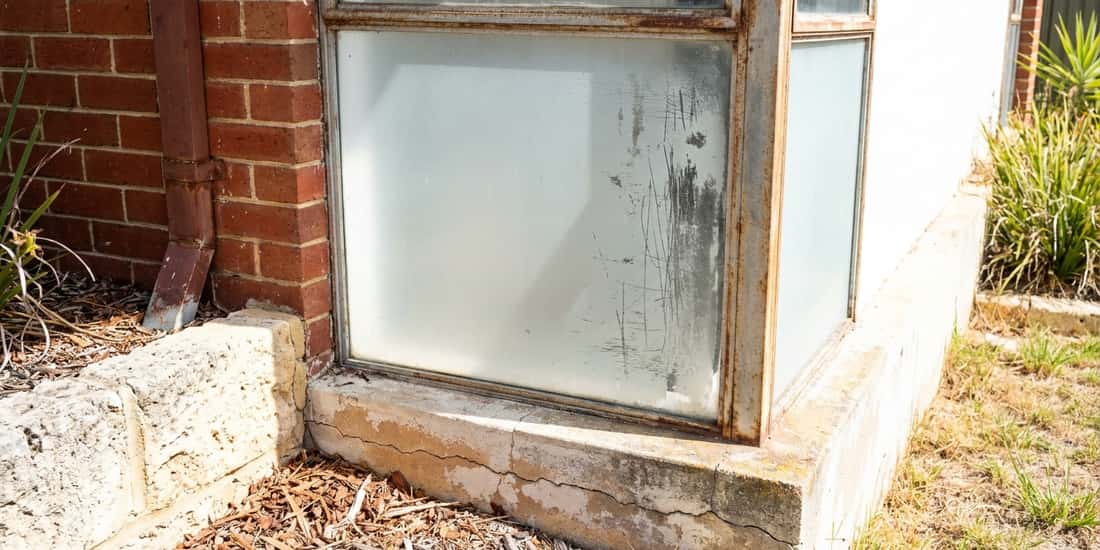
This is also why pre-existing damage matters. Glass that has already been etched by years of bore water has a pitted surface. Coating can be applied over it, but the uneven surface holds the coating less evenly and the appearance improvement is smaller. Assessing that honestly before quoting is part of a proper job.
How you clean it afterwards
A coating can be stripped in one afternoon by the wrong cleaning method. Abrasive pads, scouring creams, blades and harsh alkaline or ammonia based cleaners all attack the coating directly. So do some of the supermarket glass sprays that rely on strong solvents.
Coated glass should be cleaned gently: soft cloth or soft brush, plain water or a neutral pH cleaner, no scrubbing. That is one of the reasons coating pairs so naturally with deionised water methods, where the water does the work and nothing aggressive touches the surface. If that approach is new to you, our guide to pure water window cleaning versus traditional methods explains how it differs from the bucket and squeegee approach.
The frequency of cleaning matters less than the method. Gentle cleaning every few months does not shorten coating life meaningfully. One aggressive scrub with the wrong product can end it.
So what should you actually expect?
Putting the variables together, a realistic way to think about it:
- Sheltered internal glass and shower screens: the longest life, because there is no UV, no salt and no wind driven grit. Wear comes from cleaning products and hard water, both of which you control.
- Sheltered external glass in an inland suburb, cleaned gently: the upper end of whatever range the applicator quotes.
- Sun exposed, coastal or reticulation hit glass: the lower end, sometimes well below it, and the seaward facing panes will need attention long before the rest of the house.
Rather than trusting a number, test it. Spray the glass and watch the water. Tight beads that run off cleanly mean the coating is working. Water that spreads flat and clings means it has thinned, and that is the point to consider reapplication, before deposits start bonding to bare glass again.
The other thing worth saying plainly: coating is not a replacement for cleaning. It is a way of making cleaning easier, less frequent and less punishing on the glass. Anyone promising you will never need to clean the windows again is selling something other than reality.
If you want a straight assessment of whether your glass is a good candidate, and what exposure and water conditions at your address mean for realistic lifespan, have a look at Purified Group’s nanocoating treatment and ask for an honest read on your own windows before you commit.
Frequently Asked Questions
How can I tell if my nano coating is still working?
Wet the glass with a hose or spray bottle. Fresh coating makes water pull into tight beads that run off quickly, leaving very little behind. When water spreads into flat sheets and clings, the coating has worn thin and the glass is due for reassessment.
Does nano coating stop hard water stains completely?
No. It reduces how much mineral residue sticks and makes what does land far easier to remove. If bore water reticulation is hitting the glass daily, you still need to redirect the sprinklers, because no coating survives that indefinitely.
Can nano coating be reapplied to the same glass?
Yes. The glass is cleaned, any remaining coating and mineral residue is removed, and a fresh layer is applied. Reapplication is usually quicker than the first treatment because the deep decontamination work has already been done once.
Is coating worth it on windows that are easy to reach?
It depends on what you are solving. On accessible ground floor windows the main benefit is fewer marks between cleans. On high, awkward or salt exposed glass, where each clean is a bigger job, the value of stretching the interval is far greater.
Will nano coating damage tinted or double glazed windows?
A coating applied to the external face of the glass does not interfere with film on the inside face or with a sealed unit. The important part is that whoever applies it identifies what they are working with first, because surface preparation differs.