Most of what gets written about render maintenance comes from people who repair or recoat render for a living. That shapes the advice. Every mark becomes a symptom, every symptom becomes a quote, and homeowners end up budgeting for crack stitching when what the wall actually needed was a wash.
In Perth, the honest picture is different. The large majority of what makes a rendered home look tired here is surface level: airborne dust, algae in the shade, salt film on the western side of town, and orange bore water overspray. None of that is structural. All of it is a cleaning problem, and treating it as one early is what keeps the wall from becoming a repair problem later.
Why Perth ages render the way it does
Render is a sacrificial surface. It takes the weather so the substrate behind it does not. What varies between cities is the kind of weather it takes.
Bore water is the signature Perth problem. Reticulation drawing from groundwater carries dissolved iron. When that water hits a wall and dries, the iron oxidises and leaves the orange to brown staining that Perth homeowners know too well. It is most obvious on light coloured render, and it concentrates in bands at sprinkler height or in fan patterns where a head is throwing wider than intended. This is a chemical stain bonded to the surface, not loose dirt, which is why ordinary washing barely touches it.
Salt air changes the picture west of the freeway. Suburbs close to the coast get a fine salt deposit that sits on render, holds moisture longer than dust does, and encourages growth. Salt is also abrasive in wind. Combine it with the sand that moves around most Perth suburbs through summer and you get a slow scouring effect on the seaward elevations.
UV does the quiet work. Perth sits under a high UV load for most of the year, and acrylic and tinted finishes lose depth of colour over years of that exposure. Northern and western walls go first. UV ageing is gradual and even, so if one wall looks patchy rather than uniformly lighter, you are usually looking at dirt or growth rather than fade.
Shade creates the opposite problem. Southern walls, sections behind dense planting, and anything under a deep eave or patio stay damp longer after rain or reticulation, and that is where algae and mould establish. The same house often has a chalky western wall and a green tinged southern wall at once, which is why a single approach for the whole building rarely makes sense.
Reading your render before you touch it
Walk the perimeter and sort what you see into two piles: things that sit on the surface, and things that are the surface.
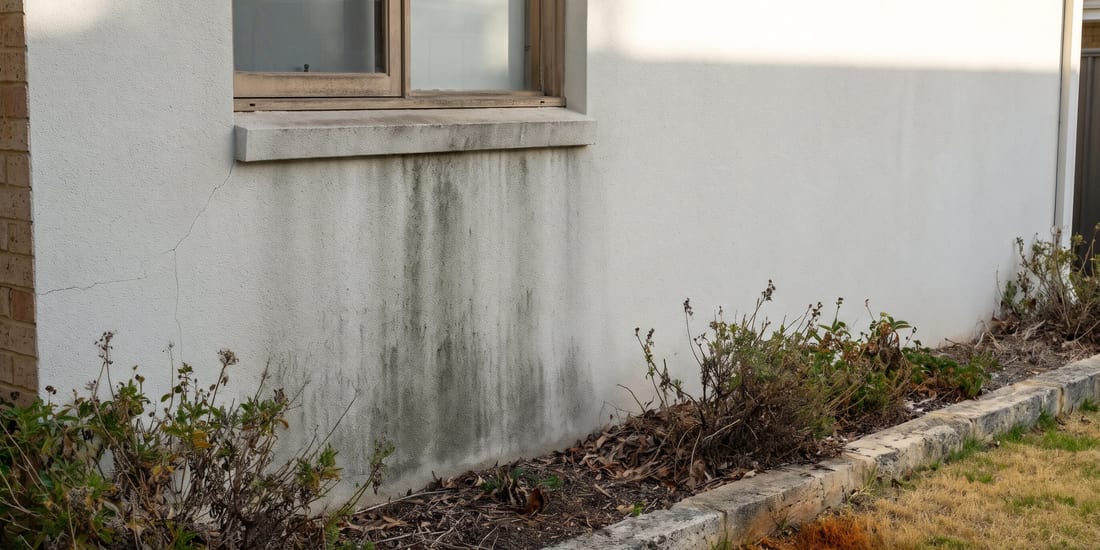
Surface issues that respond to cleaning include grey or brown dust films, green and black biological growth, cobwebs and insect residue, salt haze, overspray from reticulation, and splash marks from garden beds. Run a finger across the mark. If it lifts, smudges or changes the colour of your fingertip, it is a deposit.
Issues that are not cleaning problems look different. Hairline map cracking across a panel, a single long crack running from the corner of a window or door, bubbling where the coating has lifted from the substrate, a hollow or drummy sound when you tap the wall, or efflorescence, the white crystalline bloom that comes from salts migrating out through the wall. Spalling matters most of all: where render over a concrete lintel, balcony edge or slab face is flaking off in chunks and you can see rust or exposed steel behind it, you may be looking at concrete cancer, where reinforcement corrodes and expands until it pushes the surface off. Coastal Perth homes are more exposed to this than inland ones. None of it is washable.
One honest grey area. Dark staining running down from a window sill, a leaking gutter joint or an air conditioner condensate line is cosmetic in itself, but it is telling you water is going somewhere it should not. Clean it by all means, then fix the source, or the stain returns within a season.
Why soft washing, not pressure washing
Modern Perth homes are rarely finished in traditional sand and cement alone. Acrylic and silicone based texture coats are the norm, and they behave very differently under a pressure wand than concrete does.
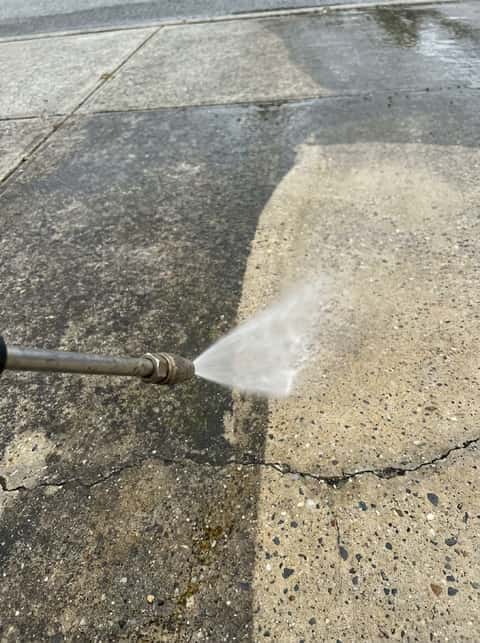
High pressure on these finishes can abrade the texture flat in patches, leaving stripes and arcs that are permanent and far more obvious than the dirt you removed. It can drive water past the coating through hairline cracks and around window and door junctions. On older or already compromised render it can lift sections away entirely. Sealants and seals around frames are also vulnerable, and once water gets behind the system, you have converted a cosmetic job into a repair job.
Soft washing works on a different principle. Pressure is dropped to roughly what comes out of a garden hose, and the work is done by the cleaning solution rather than by force. A detergent suited to the surface is applied, left to dwell long enough to break down the soiling and kill biological growth at the root, then rinsed away at low pressure. Nothing is blasted. The texture is left exactly as the applicator finished it.
The practical difference shows up months later. Pressure washing knocks the green off the top of an algae colony. Soft washing treats the organism, so regrowth is slower and the wall stays clean for longer between visits.
Hard surfaces are the exception. Driveways and paths genuinely benefit from higher pressure, which is why technique depends entirely on what you are standing in front of. Our guide on how often you should pressure clean your driveway in Perth covers that side of the property.
A realistic cleaning interval for Perth rendered homes
There is no single number that fits every house. Use these as starting points and adjust the cleaning interval by elevation rather than treating the building as one unit.
Annually suits most Perth rendered homes as a baseline. A yearly soft wash keeps dust, salt film and early growth from establishing, and the job stays straightforward.
Every six to twelve months is more realistic for coastal properties, homes with significant shaded elevations, properties under large trees, and anywhere bore water reticulation contacts the walls. These are the houses where leaving it two years turns a wash into a restoration.
Every eighteen months to two years can be enough for well drained inland homes with good sun exposure on all sides, scheme water reticulation, and no overhanging vegetation.
The shortcut: whichever wall looks worst sets the schedule. There is no benefit in cleaning three elevations and leaving the fourth to seed growth back onto the rest.
Treating algae and mould without wrecking the colour
Coloured and through-tinted renders are the finishes most often damaged by well intentioned DIY cleaning. Three things matter.
First, chemistry has to suit the coating. Chlorine based solutions clear growth quickly, but concentration, dwell time and rinsing all have to be controlled, and surrounding plants need protection. A test patch somewhere inconspicuous is worth the ten minutes.
Second, avoid mechanical scrubbing. Stiff brushes polish the high points of a texture coat and leave shiny patches that catch the light and never go away. Let the solution do the work.
Third, rinse properly. Residue left on render attracts dust and can leave streaking that looks worse than the original growth. A full, even, low pressure rinse from the top down is part of the job.
Bore water staining is its own category. General washing will not shift bonded iron. It needs a targeted iron and rust treatment, applied with care on a tested patch, and even then the result depends on how long the stain has been there and how porous the finish is. Redirecting the sprinkler head matters just as much as treating the mark.
Fold it into one exterior maintenance routine
Render cleaning done in isolation is a missed opportunity. Everything on the outside of a Perth home is collecting the same dust, salt and growth at the same time, and most of it is reached with the same access equipment.
Gutters and downpipes come first, because overflow is a direct cause of the vertical staining people later pay to clean off render. Windows and frames should follow the walls, not precede them, so the rinse does not undo the glass work. Eaves and fascias sit in shade and often hold more growth than the walls below them.
Solar is the one most people forget, and in Perth it carries a measurable cost. Panels lose output under the same dust and salt film that dulls your render, and rooftop access is already arranged while the exterior work is under way. Booking Purified Group’s Perth solar panel cleaning alongside a render wash turns two access jobs into one.
Scheduling the lot once a year, ideally after the worst of summer dust, gives you a single predictable maintenance routine rather than a series of reactive call-outs.
When to stop washing and call a repairer
A cleaner is the wrong trade for structural issues. Get a render repairer, builder or building inspector involved if you find cracks wider than a credit card edge, cracking that has visibly grown, drummy or hollow sounding sections, render lifting or blistering away from the wall, damp patches inside matching a stained area outside, or persistent efflorescence that returns after cleaning.
Cleaning those areas does not help and can hurt. Water introduced into a failing render system has somewhere to go, and it is usually inwards. A good cleaning contractor will say so and decline the work on those sections rather than wash over a problem.
It rarely comes to that, though. On most Perth homes, a wall that looks past saving is simply carrying several years of dust, salt and growth that nobody has touched. If you are not sure which pile your walls fall into, start with an honest look at the property rather than a quote for recoating. Get in touch with Purified Group and we will tell you plainly whether it is a cleaning job or one for another trade.
Frequently Asked Questions
Can you pressure wash rendered walls?
You can, but on acrylic and silicone renders it is a poor idea. High pressure can open the surface, strip texture, force water behind the coating and leave permanent wand marks. Soft washing at garden hose pressure, paired with the right detergent, is the safer default on modern rendered homes.
How often should render be cleaned in Perth?
Most Perth rendered homes look best on a yearly clean, with shaded southern and eastern walls, coastal properties and bore water affected elevations often needing attention every six to twelve months. Dry, sunny, inland walls can sometimes stretch to two years.
Will cleaning remove bore water stains from render?
Orange iron staining from bore water usually needs a dedicated rust and iron treatment rather than general washing. Results vary with how long the stain has sat and how porous the finish is, so a test patch on an inconspicuous wall is sensible before treating a whole elevation.
Does cleaning render damage the colour?
Not when the method suits the finish. Through-coloured and tinted renders fade with UV over time, and aggressive scrubbing or high pressure accelerates that by abrading the surface. Low pressure application, correct dwell time and a thorough rinse protect the colour.
What if my render is cracked or bubbling?
Stop and call a render repairer or a building inspector. Cracking, drumminess and bubbling point to movement, adhesion failure or trapped moisture. Washing those areas will not fix them and may make a water ingress problem worse.