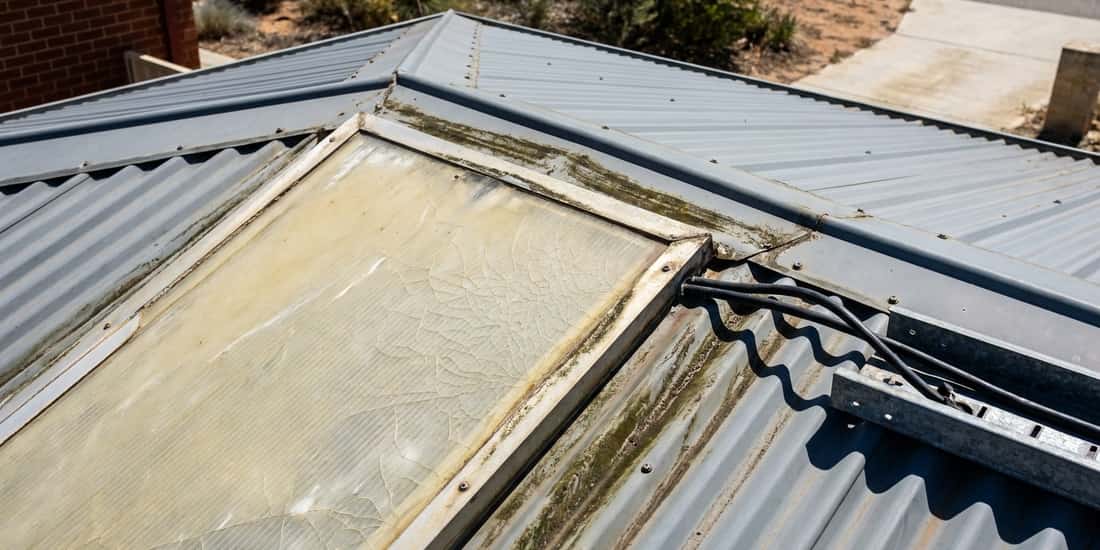
Most conversations about warehouse solar cleaning start with output and payback. That is a reasonable place to start, but it is not where a facility manager's exposure sits. Your exposure sits with the people you let onto a large, hot, elevated metal roof covered in electrical equipment, and with whether you can demonstrate you checked before they went up there.
Under Western Australian work health and safety law, a business that engages a contractor still holds a duty of care for the workers it influences and directs, and for anyone else affected by the work. That duty does not transfer with the invoice. So the questions below are worth asking before the booking, not after an incident report.
Start with how they plan to get on the roof
Access method is the single most revealing question you can ask, because it tells you whether the contractor has actually looked at your building.
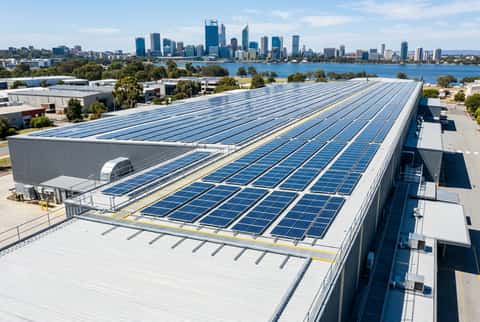
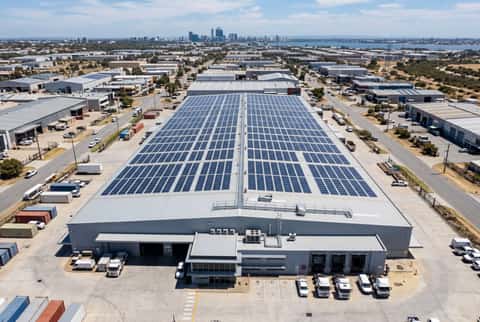
Warehouse roofs across Perth's industrial estates are mostly profiled steel sheeting over purlins, often with translucent polycarbonate skylight panels set into the run. Those skylights are the classic hazard. They look identical to the surrounding sheeting from a distance, they degrade under UV over years, and they will not hold an adult's weight. A contractor who has not asked about skylights, or who has not mentioned covers, mesh or an exclusion route around them, has not thought the job through.
Ask specifically:
- How will crew and equipment reach roof level? Internal roof hatch, fixed ladder, mobile scaffold, or an elevated work platform brought to site?
- If an EWP is proposed, is there hardstand to set it up on, and does that setup block a truck dock or fire egress path?
- Can any of the array be reached without walking on the roof at all?
That last question matters more than it sounds. On single storey warehouses with a modest parapet, a boom lift can often service a large share of an array from the basket, which removes the roof traverse entirely. Removing the hazard beats managing it.
Fall protection has to be specific, not implied
"We work at heights all the time" is not an answer. The answer you want describes the actual control being used on your roof.
There is a hierarchy at work here. Passive controls such as guardrails, edge protection or a work platform sit above fall arrest systems that rely on a harness and a competent user. Where a contractor proposes to clip onto your building's existing anchor points or static line, two things need to be true. The anchors must have a current inspection tag from a competent person, and the contractor's staff must be trained and equipped to use them. Height safety systems on older warehouse roofs are frequently overdue for inspection, and a contractor who assumes yours are compliant without asking to see the paperwork is a contractor who will assume other things too.
Ask for evidence of working at heights training for the individuals attending, not a company level statement. Ask what the rescue plan is if someone does fall and ends up suspended in a harness. A crew without a rescue plan has a fall arrest system that only solves half the problem.
Electrical awareness is a separate question from electrical work
Cleaning crews are not electricians, and they should not be pretending otherwise. What they should have is enough awareness to recognise when to stop.
A solar array on a warehouse roof produces DC voltage whenever there is daylight on the modules. Switching the inverter off does not make the DC side dead. That is not a reason to panic about washing glass, which is a low risk activity on an intact array, but it is a reason to insist on a pre-clean visual inspection covering:
- Cracked, delaminated or heat damaged glass
- Cabling that has come loose from its trays and is sitting in a water path
- Connectors that are exposed, sun degraded or lying against the roof sheet
- Junction boxes with visible scorching or discolouration
If any of those show up, the correct response is to stop, keep water away from that section, and report it to you so a licensed electrician can attend. A contractor who tells you they will "sort out" a damaged connector while they are up there is telling you they do unlicensed electrical work, which is both an offence and an insurance problem waiting to happen.
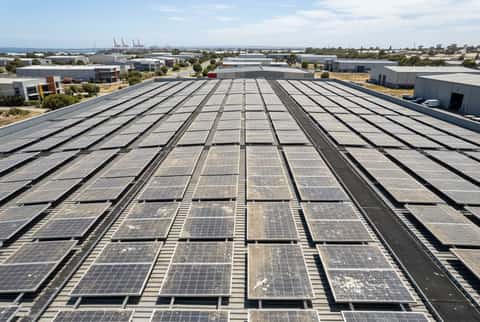
Ask also about water pressure and equipment. High pressure gear aimed at module frames and rear junction boxes can force water past seals. Purified water at low pressure with soft brushes is the appropriate approach for panel glass, and it also avoids the mineral spotting that makes a freshly cleaned array look worse than it did before.
Insurance, documentation and the contractor induction
By the time the crew arrives, you want a folder that holds up if anyone asks questions later.
Certificates of currency. Public liability cover and workers compensation cover for every person attending. Check the expiry dates, and check that subcontractors are covered rather than assumed to carry their own.
A site specific SWMS. Work at height above two metres is high risk construction work under WA regulations, which means a safe work method statement is required. A site specific document mentions your building, your access route, your skylights and your array layout. A generic template with someone else's site name in the header tells you the safety system is decorative.
Licences and training records. High risk work licences where an EWP over eleven metres is used, plus working at heights training for the crew.
Your own induction. Warehouse sites have their own hazards below the roofline. Forklift traffic, dock levellers, ammonia plant, racking aisles. Make the cleaning contractor sit through the same induction as any other visiting trade, and agree exclusion zones under the work area before the first bucket goes up.
Scheduling around the operation
Safety and disruption are linked. Early morning starts suit Perth conditions, because roof sheeting and module glass both get hot enough by mid morning to create burn and heat stress risk, and because cool glass tolerates cleaning water better than hot glass. Early starts also tend to sit before the day's peak dock activity, which makes ground level exclusion zones easier to hold.
Frequency planning is a separate decision from safety planning, but the two interact. Fewer, well planned visits reduce total roof exposure. If you are still working out an interval for your site, our guide on how often commercial solar panels should be cleaned in Perth covers the factors that shift the answer, including proximity to industrial dust, coastal salt and unsealed hardstand.
Red flags worth walking away from
- No written quote describing the access method
- Reluctance to provide certificates of currency before the day
- A crew that arrives with a ladder and no fall protection for a job that clearly needs it
- Offers to carry out minor electrical repairs while on the roof
- A SWMS that has never been near your site
None of these are difficult to check, and all of them are far cheaper to check than to explain afterwards.
If you would like a quote that sets out the access method, fall protection and documentation before anyone steps on your roof, you can start with our commercial solar panel cleaning across Perth service page.
Frequently Asked Questions
Do solar panels need to be switched off before cleaning?
Cleaning the glass surface does not usually require the system to be shut down, but the array should be visually inspected first for damaged glass, exposed cabling or loose connectors. If any of those are present, water should stay off the roof until a licensed electrician has looked at it. Any switching or isolation work is electrical work and belongs to a licensed electrician, not a cleaning crew.
What insurance should a commercial solar cleaning contractor hold?
Ask for a current public liability certificate of currency and evidence of workers compensation cover for everyone who will set foot on your roof. Check the policy actually references working at height and cleaning services, and check the expiry date rather than accepting a document that was issued some time ago.
Can a contractor use my warehouse roof anchor points?
Only if those anchor points have a current inspection and certification, and only if the contractor's staff are trained to use them. Height safety anchors and static lines require periodic inspection by a competent person. If yours are out of date, the contractor will need an alternative such as an elevated work platform.
What is a SWMS and should I ask for one?
A safe work method statement sets out the high risk work being performed, the hazards involved and the controls in place. Work at height above two metres is high risk construction work under Western Australian regulations, so a contractor should be able to produce a site specific SWMS before starting, not a generic template with another client's name on it.
Is it safer to clean warehouse panels early in the morning?
Generally yes. Roof surfaces get hot enough in a Perth summer to be a burn and heat stress risk by the middle of the day, and panels cool enough in the early morning that cleaning water is less likely to hit hot glass. Early starts also tend to work better around loading dock activity below.