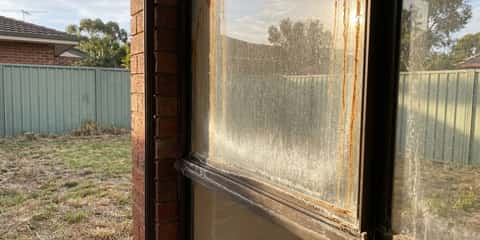
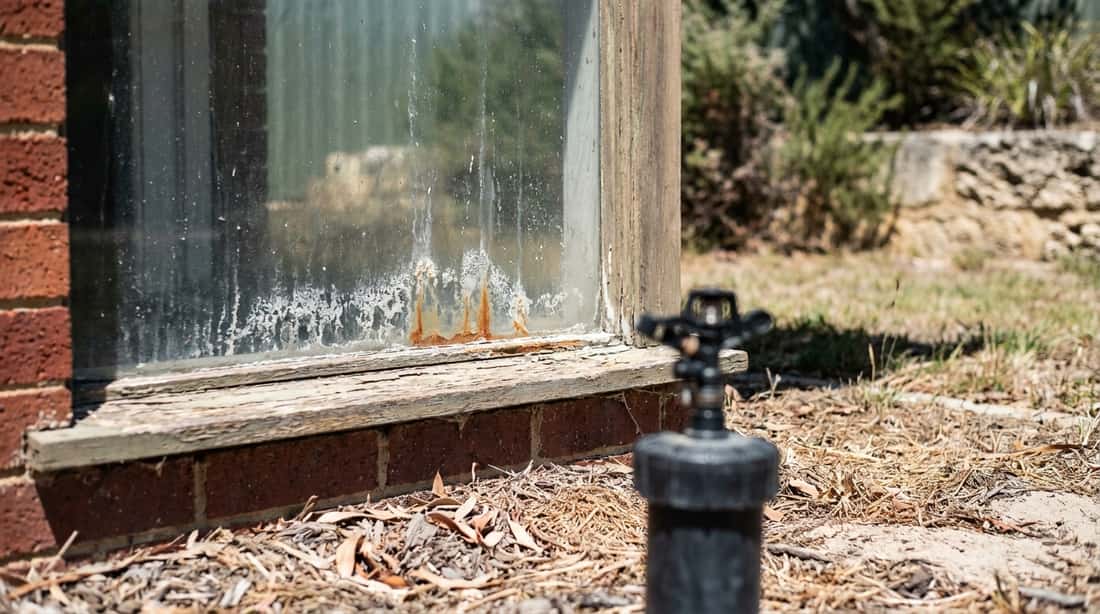
You wash the windows. They look good for a fortnight. Then the cloudy white rings creep back across the lower half of the glass, always on the same windows, always at roughly the same height.
The reason is usually sitting in your garden bed, ticking away at five in the morning. Perth relies heavily on bore water for reticulation, and that water is doing something to your glass that ordinary dirt never does.
Why bore water causes so much window staining in Perth
Scheme water in Perth is treated and reasonably consistent. Bore water is not. It is drawn straight out of the ground, which in the Perth metropolitan area means the shallow aquifers sitting under our limestone and sand geology.
Limestone is calcium carbonate. Water sitting in and moving through it picks up dissolved calcium and magnesium, which is exactly what "hard" water means. Many Perth bores also carry dissolved iron, which is why so many local driveways, fences and rendered walls show that familiar orange staining.
Here is the mechanism. A sprinkler throws water onto the glass. The water sits there. Perth sun and wind evaporate it quickly. The water leaves, the minerals do not. Repeat that two or three times a week for a couple of summers and you no longer have a stain sitting on the glass. You have a crystalline mineral deposit with a genuine chemical grip on the silica in the glass, which is why it laughs at the detergent that lifts ordinary dirt.
Work out what you are actually looking at
Before you treat anything, identify the deposit. The wrong chemical wastes an afternoon.
Chalky white or cloudy grey rings and spray patterns. Calcium and magnesium carbonate. This is the most common form and it responds to mild acid.
Orange, tan or rust coloured streaks. Iron. Vinegar barely dents it. Iron needs a rust remover, and the active ingredient you are looking for is oxalic acid.
A uniform haze that does not change when wet. This is the bad one. Run a wet finger over the glass and look through it. If the cloudiness disappears while the glass is wet and returns as it dries, you have surface deposits and they can be removed. If the haze stays even when the glass is soaking wet, the surface has been etched and no cleaning product will fix it.
Etching happens because the trapped mineral residue is alkaline. Held against the glass through repeated wetting and drying, it slowly leaches silica out of the surface, leaving microscopic pitting that scatters light. At that point the options are mechanical polishing with a cerium oxide compound, or replacement of the pane.
Removing calcium deposits yourself
For fresh to moderate white staining, this sequence gives you the best chance without risking the glass.
- Pick your window and your weather. Work on glass that is cool and out of direct sun. Hot glass flashes the solution dry before it has time to react, and streaky half dissolved scale is harder to remove than the original stain.
- Wash the window normally first. Warm water and a squirt of dish soap. You want the acid attacking minerals, not dust and spider webs.
- Mix warm white vinegar with warm water, roughly half and half. Warmth speeds up the reaction noticeably. For heavier deposits use undiluted vinegar.
- Keep it wet. This is the step most people skip. Soak a microfibre cloth or an old towel in the solution and hold it against the glass. Give it five to ten minutes. Dry contact time does nothing.
- Agitate. A white non-scratch scouring pad or a nylon bristle brush, moving in small circles, with the surface still wet. You should feel the texture change as the deposit breaks up.
- Rinse thoroughly and dry immediately. Flood the glass with clean water to carry the dissolved minerals away, then squeegee or dry with a clean microfibre. Do not let the rinse water evaporate on the glass, or you have simply made a fresh set of spots.
Expect to repeat the cycle two or three times on older staining. If two passes produce no visible improvement at all, stop. You are almost certainly dealing with etching or iron, and more scrubbing only risks scratches.
For iron staining, swap the vinegar for an oxalic acid based rust remover, follow the manufacturer's dwell time exactly, and rinse even more thoroughly than you would with vinegar.
What not to do
Never use steel wool, green scouring pads, wet and dry sandpaper or a metal blade on coated glass. Toughened, tinted, low emissivity and self cleaning glass all carry surface coatings that abrasives destroy instantly, and the damage looks worse than the stain did.
Keep acid off aluminium frames, powder coating, rubber seals and silicone beads, mask what you cannot avoid, and rinse frames as you go. Never mix acidic cleaners with bleach or ammonia based products, which together produce genuinely dangerous fumes. And test a corner of an inconspicuous pane before committing to a full window.
The step most people skip: fix the reticulation
You can restore glass beautifully and see the same stains return in a single season, because the cause is still running on a timer.
Walk the perimeter of the house early in the morning while the reticulation is actually operating. Watch where the water goes rather than where you assume it goes. Common culprits include:
Sprinkler arcs set too wide. A pop up rotating a few degrees too far past the garden bed will hit the wall and the glass above it. Most sprinklers allow the arc to be adjusted by hand or with a small key.
High throw nozzles close to the building. Beds against the house need low angle or shrub nozzles, not the same 30 degree spray you use on lawn. Lower trajectory keeps water under the sill line.
Excessive line pressure. Over pressured sprinklers atomise water into a fine mist that drifts onto walls and windows on the sea breeze. A pressure regulating device or a smaller nozzle often solves the problem outright.
Beds that should be on drip. Garden beds against the building are the single most reliable source of window staining. Converting them to dripline or inline emitters delivers water at soil level where the plants want it and removes the spray entirely.
Wind timing. Perth's watering day rules already push reticulation outside the middle of the day. Within your permitted window, run stations before the afternoon breeze picks up so overspray is not carried into the glass. The winter sprinkler switch off is also the ideal time to restore stained glass, because nothing will be spraying it while you work.
When restoration is a job for someone else
Ground floor windows with light spotting are a reasonable Saturday project. Extensive staining, upper storeys, large fixed panes, tinted or specialty glass, and anything approaching etching are not. Professional restoration involves stronger acids, controlled abrasives and polishing compounds, and it is genuinely possible to ruin an expensive pane with them.
Maintenance method matters after restoration too. Cleaning with hard tap water and a squeegee reintroduces minerals to the surface every visit, whereas deionised water leaves nothing behind at all. That difference is explained in more detail in our comparison of pure water window cleaning versus traditional methods.
If your glass has passed the point where vinegar helps, or you would rather not balance a ladder on limestone to find out, an assessment on site will tell you whether the staining is removable or etched before anyone touches it. You can arrange that through Purified Group’s Perth window cleaning team.
Frequently Asked Questions
Does vinegar remove hard water stains from windows?
Yes, on fresh to moderate mineral deposits. A warm 50/50 white vinegar and water solution, given several minutes of dwell time and agitated with a non-scratch pad, dissolves the calcium carbonate that makes up most bore water spotting. It will not repair glass that has already etched.
Why are the stains on my windows orange or brown rather than white?
That is almost certainly iron from bore water rather than calcium. Perth groundwater often carries dissolved iron that oxidises on contact with air, leaving rust coloured staining. Iron needs an acidic rust remover, typically oxalic acid based, rather than vinegar.
Can hard water stains permanently damage glass?
They can. If mineral deposits are left through repeated wetting and drying cycles, the alkaline residue slowly leaches silica from the glass surface and etches it. Etched glass looks cloudy even when clean and cannot be washed off. It needs mechanical polishing or replacement.
How do I stop bore water hitting my windows in the first place?
Adjust the sprinkler arc so the spray stops short of the wall, swap high throw nozzles for low angle or shrub nozzles near the house, drop the operating pressure, and consider converting garden beds against the building to drip irrigation.
Will professional window cleaning remove hard water stains?
Standard window cleaning removes dirt, not bonded minerals. Hard water stain removal is a separate restoration process using acidic treatments or abrasive polishing compounds, and it should be assessed on the glass before any promise of a full result is made.