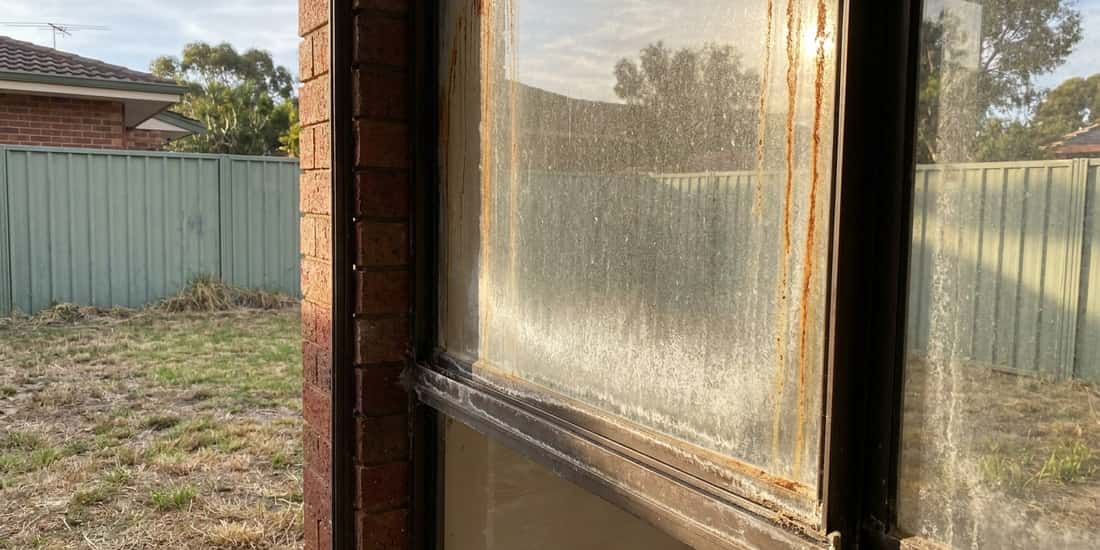
You spend an hour on the windows. They look brilliant while they are wet. Then the sun moves around, the glass dries, and there it is again: that cloudy film, the diagonal smears, the drip marks running down from the top corners. It genuinely looks worse than before you started.
This is one of the most common frustrations in Perth homes, and it is not a technique problem for most people. It is a water problem and a climate problem. Understanding what is actually happening on the surface of the glass makes it much easier to fix.
Streaks are what your water leaves behind
Water is a solvent. As it moves through the ground and through pipes, it picks up dissolved minerals: calcium, magnesium, salts, iron. Those minerals are invisible while the water is liquid. When the water evaporates, the minerals cannot evaporate with it. They stay on the surface.
On a benchtop you rarely notice. On glass, which is transparent and lit from behind, every deposit shows. Wipe wet glass with a cloth and you are not removing those minerals, you are just spreading them into thinner and thicker bands. That is exactly what a streak is: a ridge of mineral residue.
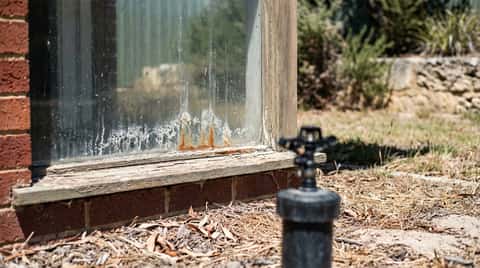
Perth's situation makes this more pronounced than in many other cities. Scheme water here carries a meaningful mineral load, so even a bucket from the kitchen tap is depositing something onto the glass. Bore water is a bigger problem again. Huge numbers of Perth properties run reticulation off a bore, and that water frequently carries iron and calcium. If your sprinklers throw spray onto windows, you are not just dealing with a cleaning residue, you are dealing with layered mineral staining that has baked on under the sun between waterings. The tell is the colour: orange or rusty streaks running down the pane are almost always bore water, while a chalky white haze is typically calcium.
The sun finishes the job
The second half of the problem is evaporation speed. Perth summers are hot, dry and bright, and glass in direct sun gets significantly hotter than the air around it.
Traditional window cleaning depends on a window of time. You wash, you agitate the dirt loose, and then you squeegee before the water dries. On a mild overcast morning you have plenty of time. On a Perth afternoon with the sun full on a west facing window, the water starts drying the moment it touches the glass. The dirt and minerals set in place before your blade gets there, and no amount of buffing afterwards will lift them cleanly. You just polish the residue.
This is why the same person, using the same bucket and the same squeegee, gets a perfect finish on the shaded south side of the house and a streaky mess on the north and west. It was never the technique.
Detergent is not helping as much as you think
Most people add dishwashing liquid to the bucket. It does help the blade glide and it does break down grease. But detergent is designed to cling and to foam, and unless it is fully rinsed away it leaves a film of its own.
That film is slightly tacky. It attracts dust immediately, which is why detergent cleaned windows in Perth often look dull again within days, particularly in suburbs near building sites, unsealed verges or the coast where wind carries fine sand. You then clean again, add more detergent, and build the film further. Over a season you are looking through a layered residue that has very little to do with the original dirt.
Your tools are probably contributing
A few practical culprits worth ruling out:
Worn squeegee rubber. The edge needs to be sharp. Once it nicks or rounds off, it stops cutting a clean line and starts leaving a thin trail of water behind it. Rubber degrades quickly in Perth heat, especially if the tool lives in a shed or the back of a ute.
Dirty water. By the third window, your bucket is a suspension of dirt. You are now washing window four with window one's grime.
The wrong cloth. Cotton rags and paper towel shed lint and push residue around. Household glass sprays containing ammonia can also react with tinted or coated glass and leave a permanent cloudy patch.
Frames and seals. You clean the glass, then the next shower or the next sprinkler cycle washes accumulated dirt out of the top frame and runs it straight down the pane. If the frames and tracks are not cleaned, streaking will return no matter how well you did the glass.
Why pure water systems solve both problems at once
The professional answer to Perth conditions is to attack the cause rather than the symptom. Pure water window cleaning runs mains water through a filtration process that strips out the dissolved solids, typically using carbon filtration, reverse osmosis and deionising resin until the water is as close to zero total dissolved solids as the system can achieve.
That changes the behaviour of the water completely. Pure water is aggressively absorbent. It actively pulls dirt and mineral deposits off the glass because it is chemically driven towards picking things up. And critically, when it dries there is nothing in it to leave behind. No minerals. No detergent. The glass is rinsed and left to dry on its own, which means no squeegee pass, no cloth contact, and no opportunity to create a streak.
It also removes the race against the sun. Because there is no drying deadline to beat, the heat that ruins a traditional clean stops mattering. The same system reaches upper storeys from the ground using telescopic poles, which is why it has become the standard approach for two storey homes here. If you want the full comparison between the two methods, we have covered it in detail in pure water window cleaning versus traditional methods.
What you can do yourself right now
If you are cleaning your own windows in Perth, a few changes make a real difference.
Work in shade, always. Follow the shadow around the house through the day rather than working through it in order. Cut back hard on detergent, using the smallest amount that still gives you glide. Change your water often. Replace squeegee rubber when it stops squeaking cleanly. Clean the frames and tracks first so runoff does not undo the glass. And check where your reticulation is spraying, because adjusting one sprinkler head away from a window will save you far more work than any cleaning method.
For existing mineral staining, act sooner rather than later. Fresh deposits sit on the surface and lift with the right treatment. Deposits that have been repeatedly wetted and baked for years begin to etch into the glass itself, and at that point cleaning will not restore clarity.
If your windows have reached the stage where nothing you do makes them look right, the issue is likely accumulated mineral bonding rather than dirt, and that needs equipment built for it. Purified Group’s Perth window cleaning uses pure water systems designed for exactly the water and weather conditions this city throws at glass.
Frequently Asked Questions
Why do my windows look worse after I clean them?
Cleaning usually lifts dirt into suspension without removing all of it. If the water carries dissolved minerals or you use a detergent, the residue redistributes across the glass as it dries and shows up as streaks and haze, which can look worse than the original even layer of grime.
Does Perth's water really cause streaks on glass?
Yes. Both scheme water and bore water carry dissolved minerals. When the water evaporates from the glass, those minerals stay behind as a visible film or spotting. Bore water is the worse of the two because it commonly carries iron and calcium that leave orange or chalky marks.
What is the best time of day to clean windows in Perth?
Early morning or late afternoon, on the shaded side of the house. Cleaning glass in direct summer sun means the water evaporates faster than you can squeegee it, which guarantees streaking regardless of technique.
Can hard water damage windows permanently?
It can. Repeated mineral deposits that are left to sit, especially from bore water sprinklers hitting the glass, can etch into the surface over time. Early on it lifts with the right treatment, but long term staining may need specialist restoration or glass replacement.
Why don't professional pure water systems leave streaks?
The water is filtered until virtually all dissolved solids are removed. With nothing in the water to leave behind, the glass dries clear on its own, so there is no squeegee pass and no detergent film to create streaks.