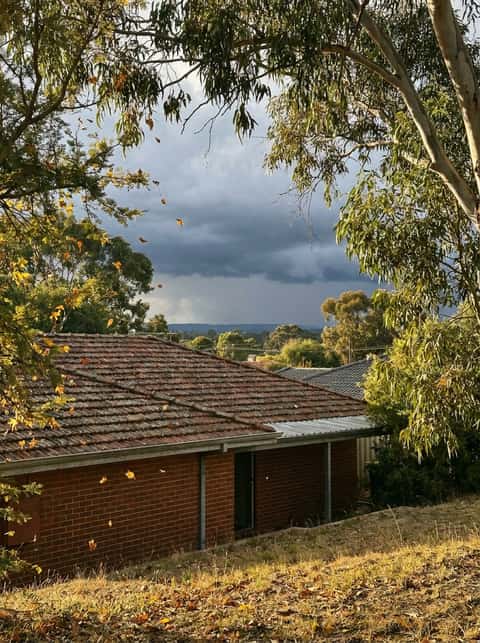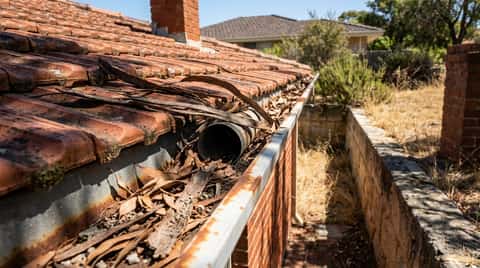
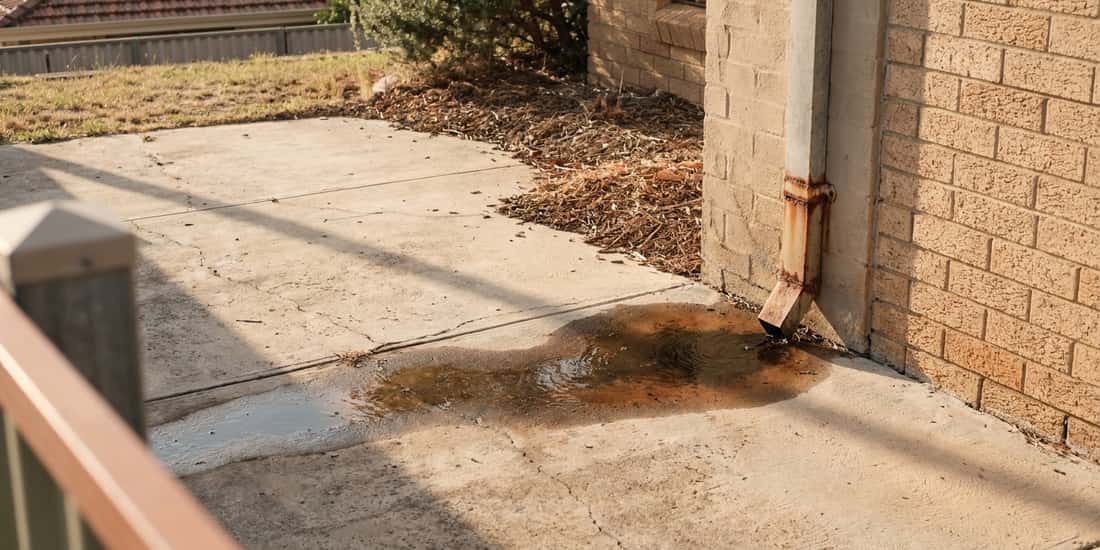
You notice it during the first decent downpour of the season. Water sheets over the front of the gutter instead of running away quietly, and there is a small waterfall landing on the path below. Somewhere between the roof and the drain, something is stuck.
Blocked downpipes are one of the most common roof plumbing problems in Perth homes, and they rarely happen at a convenient moment. The good news is that most blockages follow a predictable pattern, and there is a sensible order in which to check things. The important part is knowing where the safe DIY steps end and where the smart move is to stop and get someone with the right equipment on the job.
Why Perth downpipes block in the first place
Perth's tree mix is unusually hard on roof drainage. Gums shed leaves, twigs and long strips of bark year round rather than in one tidy autumn dump. Paperbarks drop fine, papery material that mats together beautifully once it gets wet. Jacarandas and Chinese tallow add a seasonal layer on top. None of this is dramatic on its own, but it accumulates.
The wind matters too. Perth's afternoon sea breeze pushes dry leaf litter across roofs and funnels it toward valleys and gutter corners, which is exactly where downpipe outlets tend to sit. Debris arrives dry and loose, sits in the gutter through summer, then compacts into a dense plug the moment the first real rain hits.
There is a timing problem as well. The long dry stretch lets material build up unchecked, and then the first serious autumn or winter front arrives with enough volume to expose every weak point at once. A blockage that was invisible in February becomes an overflowing corner in May.
Step one: work out where the blockage actually is
Before anyone touches a ladder, spend a few minutes diagnosing. It saves effort and it tells you whether this is a job you can reasonably tackle.
Watch the water during rain. This is the single most useful diagnostic and it costs nothing. Stand back from the house under cover and observe. If water spills over the gutter along a long stretch, the gutter is full of debris and the downpipe may be fine. If the gutter appears to drain everywhere except right at the outlet, and water backs up and overflows at that specific point, the downpipe is the problem.
Check the base of the downpipe. Look at where the pipe meets the ground or enters the stormwater drain. Is water coming out at anything like the expected volume? A trickle from a pipe that should be gushing confirms a restriction. No water at all with a full gutter above means a complete blockage.
Listen and tap. Rap your knuckles down the length of the downpipe. A clear pipe sounds hollow and consistent. A packed section usually returns a dull, solid thud, which gives you a rough idea of how far down the plug sits.
Look at the ground. Water pooling against the wall, a washed-out garden bed or a damp patch on the render below the downpipe all point to overflow that has been happening longer than you realised.
What is genuinely safe to try yourself
If conditions are dry, calm and mild, and you have a stable footing, there are a few low-risk things worth attempting.
Clear the gutter outlet from a safe position. Often the blockage is nothing more than a compacted wad of leaves sitting in the top 100mm of the pipe, right at the gutter opening. Removing it by hand with gloves on, working from a properly footed ladder that someone else is holding, can restore flow immediately.
Flush from above with a hose. Feed the hose into the outlet and run it. Water alone will shift loose material and confirm whether the pipe below is clear. If water backs straight up into the gutter, you have something more solid further down.
Check any leaf guards or downpipe strainers. If these are fitted, they are frequently the actual culprit rather than the pipe. A clogged strainer basket at the outlet is a quick fix once you can see it.
Clear the ground-level outlet. If the pipe discharges into a rainwater sump, a spreader or an open drain, make sure that end is not blocked with soil, mulch or leaf litter build-up. Blockages work upward as well as downward.
Where to stop
There is a point at which persistence stops being helpful and starts being risky. Stop and call someone if any of the following apply.
The blockage is in the middle of the pipe and hose flushing has not shifted it. Compacted bark and leaf matter in a narrow pipe can be surprisingly solid. Forcing a rod down blindly risks splitting the pipe or popping a joint, which turns a cleaning job into a repair job.
The problem is in an underground stormwater line. Perth homes commonly run downpipes into buried pipework. If the downpipe itself is clear but water backs up at the base, the issue is below ground, and that needs a proper drain camera and jetting equipment.
You are dealing with a two storey home, a steep pitch or a tile roof. Perth roofs are heavily weighted toward concrete tile and coated steel sheeting. Tiles crack under foot in ways that are not always obvious at the time, and the leak shows up months later. Metal roofs get slick and are unforgiving of a misstep.
It is hot, or a storm is forecast. Working on a Perth roof in summer afternoon heat is a genuine health risk, and roof surfaces get hot enough to burn. During a storm warning, ladder work is simply not worth it.
Managing the overflow until it is fixed
If a storm is coming and the pipe is still blocked, protect the building rather than the plumbing. Move anything stored against the wall below the overflow point, and clear the ground so water running off the eaves disperses instead of pooling against the slab. Check that nearby garden beds are not going to funnel water back toward the house. Then note exactly where the overflow occurred, because that tells whoever clears it which outlet and which run of gutter need attention.
Timing the fix properly
The best time to deal with a blocked downpipe is before the season it will fail in. For most Perth properties that means a clean in autumn, ahead of the winter fronts, with a second look during spring if the property is heavily treed. Booking after the first big overflow means you have already absorbed some water damage risk.
For the full seasonal picture, including what to check on the roof itself, our guide to gutter cleaning before Perth's storm season walks through the whole preparation sequence.
When professional clearing makes sense
A professional clean addresses the whole system rather than the one visible symptom. That means clearing every gutter run, flushing each downpipe to confirm flow, checking the outlets and identifying anything that is going to cause the same problem again in six months, such as a sagging gutter section holding water or a downpipe that is undersized for the roof area feeding it.
It also removes the ladder from the equation entirely, which for a two storey Perth home in February is the most sensible part of the decision. If you would rather have the system checked and cleared properly before the next front arrives, Purified Group’s Perth gutter cleaning covers gutters, downpipes and outlet flow testing across the metro area.
Frequently Asked Questions
How do I know if my downpipe is blocked rather than my gutter?
Watch during rain. If water pours over the gutter edge near the downpipe outlet while the rest of the run stays reasonably clear, the blockage is likely in the pipe. If water spills evenly along a long stretch, the gutter itself is full.
Can I clear a blocked downpipe with a garden hose?
Sometimes. Feeding a hose down from the gutter outlet can shift loose leaf matter, particularly in the top section of the pipe. Compacted debris, or a blockage in an underground stormwater line, usually needs proper equipment.
Is it safe to clear gutters during a storm warning?
No. Wet roofs, gusting wind and lightning risk make ladder work genuinely dangerous. If a storm is forecast, manage the overflow at ground level and book the clean for after the weather passes.
How often do Perth homes need gutters and downpipes cleared?
Most properties benefit from at least an annual clean before storm season. Homes surrounded by gums, jacarandas or paperbarks often need two visits a year because of continuous leaf and bark drop.
What damage can a blocked downpipe actually cause?
Overflowing water can rot fascia and eaves, soak wall cavities, undermine footings and pool against the slab. Standing water in gutters also attracts mosquitoes and can corrode the gutter from the inside.