Ask three Perth cleaners what they charge to clean a rooftop solar array and you can easily get three different answers, structured three different ways. One quotes per panel. One quotes a flat price for the visit. One wants photos of the roof before committing to anything.
None of them is necessarily being difficult. Solar panel cleaning is a job where the panels are the easy part and everything around them (height, pitch, access, safety) is what consumes the time. To judge whether a quote is reasonable, it helps far more to understand what the price is made of than to memorise a rate.
How solar cleaning quotes are usually structured
Most pricing models fall into one of three shapes.
Minimum call-out plus a per panel rate. The call-out covers travel, setup, water treatment and pack down, which happen whether you have six panels or twenty-six. The per panel rate covers the actual cleaning. This is the most common residential structure, and it is why a small array rarely costs proportionally less than a large one.
Flat site price. Common for larger homes and commercial roofs, usually quoted after the cleaner has seen photos, satellite imagery or the site itself.
Rate per kilowatt or per square metre. Mostly used on commercial arrays where panel counts run into the hundreds and counting individually is impractical.
None is inherently better. What matters is that the quote reflects your actual site rather than a generic assumption about it.
Panel count and system size
Panel count is the most obvious driver, but it does not behave in a straight line. Fixed costs dominate small jobs. A ten panel system on a simple roof might take well under an hour of cleaning once the operator is set up, so most of what you are paying for is the setup itself, plus the travel to get there. Perth is a long, thin city, and distance matters far more on a small job where it is a large share of the total.
As arrays grow, the per panel cost tends to fall. A thirty or forty panel system spreads the same travel and equipment time across far more work. This is why owners of larger systems often find the per panel price surprisingly reasonable, and owners of very small systems sometimes feel the minimum charge is steep. It is not a mark-up. It is the fixed cost showing through.
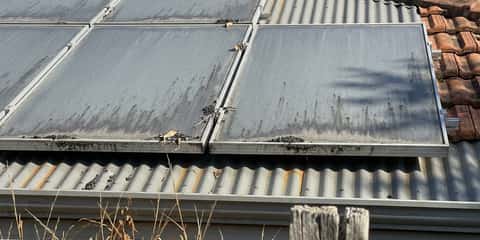
Condition matters alongside count. A first clean on an array that has never been touched, or one carrying baked-on bird droppings, salt film or construction dust, takes more passes than routine maintenance on panels done last year.
Storey height and roof pitch
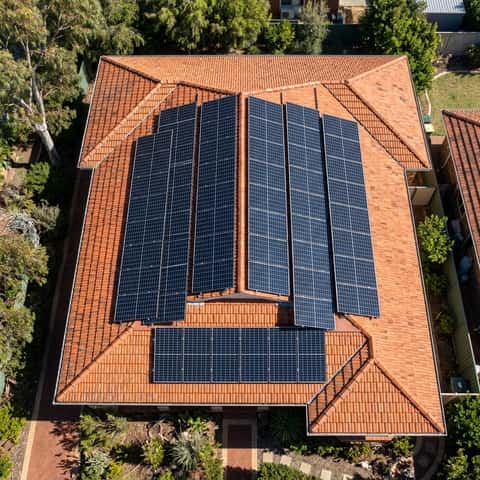
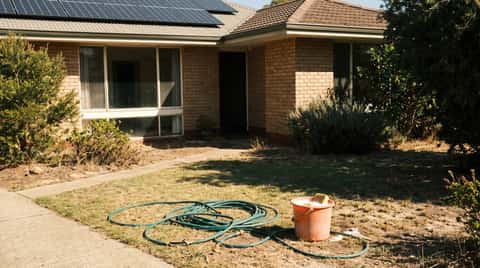
Height changes the job more than most people expect. On a single storey home with a shallow pitch, a technician working from a pole system on the ground or from a stable ladder can often complete the clean efficiently.
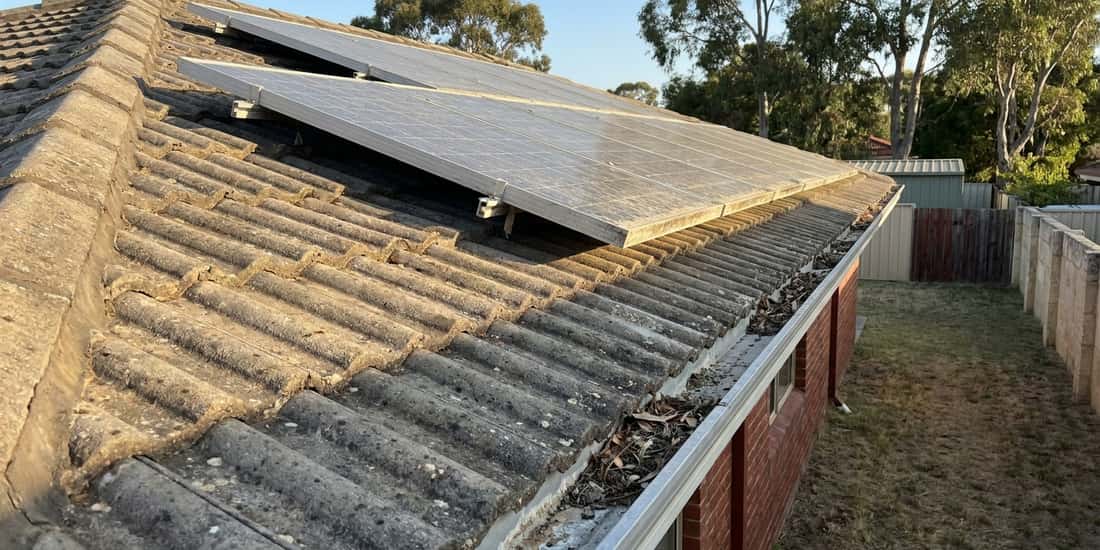
Add a second storey and several things change at once. Ladders get longer and take longer to set and reset. Water pressure and pole reach become limiting factors. The time spent repositioning safely between sections of the array grows. On steeply pitched roofs, or on Perth's common concrete tile roofs where footing is less forgiving, the safe working method changes again. Pitch also affects whether the array can be reached at all: a low pitch array may be workable from the gutter line, while panels near the ridge of a steep roof may need a different approach entirely.
Roof access and height safety
This is the factor that most often explains a large gap between two quotes on the same house.
Working at height carries genuine obligations. Depending on the roof, a compliant job may require harnesses and anchor points, edge protection, or in some cases an elevated work platform. Hiring and positioning an EWP is a significant cost, and on a tight suburban block it may not even be possible without moving vehicles or negotiating access with a neighbour.
Ground conditions matter too: whether there is a clear, level setup area, whether side access is wide enough for equipment, and whether trees, verandahs or air conditioning plant sit in the way. A cleaner who has assessed all of this and priced it honestly will sometimes look more expensive than one who assumed a best case scenario and will ask for more on the day.
Bundling with other exterior services
This is the most practical lever a homeowner has over total cost. Gutter cleaning, roof washing, window cleaning and solar panel cleaning all share the same travel, setup, ladder work and pack down. Paying for that sequence once instead of three times across the year is a real saving, and it produces better results. Cleaning gutters after solar panels, or washing a roof after the panels have been done, can undo the work.
Residential versus commercial pricing
Commercial arrays follow different logic. Scale usually brings the per panel rate down, but other costs come in. Site inductions, safe work method statements and supervised access all take time. Many commercial arrays sit on large flat roofs where the distance between access point and array is significant, and tilt frames or ballasted mounting create their own constraints. Work may need to happen outside trading hours or at low generation times, which carries a premium.
Many commercial clients also want documentation: before and after photos, panel condition notes, and a record of the service for warranty or asset management purposes. For a strata building or a facility manager, that reporting is part of the value, not an extra.
A checklist for judging whether a quote is fair
Before comparing numbers, compare what is inside them.
- Has the cleaner assessed the site? Photos, imagery or an inspection. A quote given with no information about your roof is a guess.
- What water is being used? Purified or deionised water rinses clean without leaving mineral spotting. Tap water can dry to a film that undoes much of the benefit.
- Are detergents or abrasives involved? Harsh chemicals and abrasive pads can damage anti-reflective coatings and seals.
- Is pressure washing being used on the panels? It should not be. High pressure can force water past seals and void manufacturer warranties.
- Will anyone walk on the panels? Standing on modules can cause microcracks that are invisible from the roof and show up later as lost output.
- Is there current public liability insurance? Ask for the certificate. Height work on your roof is not the place to assume.
- Does the price include an inspection and before and after photos? Loose clamps, damaged cable ties and cracked glass are worth knowing about while someone is up there.
- Is anything conditional? Understand what triggers a variation before the day.
A quote markedly cheaper than everything else usually has a reason. Sometimes it is a genuinely efficient operator. Often it is missing insurance, height safety, water treatment or all three.
Cost against frequency
The other half of the budgeting question is how often the job needs doing. Cleaning too often wastes money. Leaving it too long means heavier soiling, which costs more per clean and reduces generation in the meantime. Coastal homes, tree-lined blocks and properties near dust sources sit at different points on that scale, and working out the right interval is covered in our guide to how often you should clean residential solar panels in Perth.
The most useful quote is one based on your actual roof, panel count and access. If you would like a price built that way, along with a straight answer on what is included, you can arrange an assessment through Purified Group’s Perth solar panel cleaning service.
Frequently Asked Questions
Why do solar panel cleaning quotes in Perth vary so much?
Because the job varies. A single storey home with a low pitch roof and easy ladder access is a very different task to a double storey with a steep tile roof needing height safety equipment. Panel count, access, roof height, how heavily soiled the array is and travel distance all move the price.
Is solar panel cleaning usually priced per panel or as a flat rate?
Both approaches are common. Many cleaners apply a minimum call-out that covers travel and setup, then a per panel rate above a certain count. Larger residential and commercial arrays are often quoted as a flat site price after an assessment of access and condition.
Does a two storey home cost more to have solar panels cleaned?
Generally yes. Extra height means longer ladders or pole systems, more setup time, and in many cases additional height safety measures. The panels themselves are no harder to clean, but getting safe access to them takes longer.
Can I reduce the cost by bundling solar cleaning with other services?
Often, yes. Gutter cleaning, roof washing, window cleaning and solar cleaning all share the same travel, setup and access work. Combining them into one visit spreads those fixed costs across more work rather than paying them twice.
Is the cheapest solar panel cleaning quote usually the best value?
Not always. Very low quotes can mean rushed work, pressure washing, tap water that leaves mineral spotting, technicians walking on panels, or no public liability cover. Ask what is actually included before comparing numbers.