Most people notice the problem the same way. The system has been quietly doing its job for months, then the app shows a mid morning dip that does not match the weather, and a look from the driveway reveals white streaks across the top row of panels.
Bird droppings on solar panels in Perth are common, and they are more of a cleaning and access problem than a pest problem. Understanding why they hurt output so much, and why the obvious fixes are risky, tends to change how homeowners approach the whole thing.
Why droppings cost more output than dust
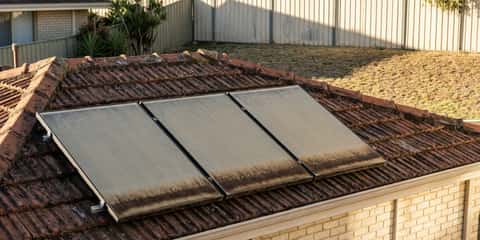
Dust is a filter. It spreads over the glass fairly evenly and reduces the light reaching every cell by a modest amount. Output falls, but it falls gently and predictably.
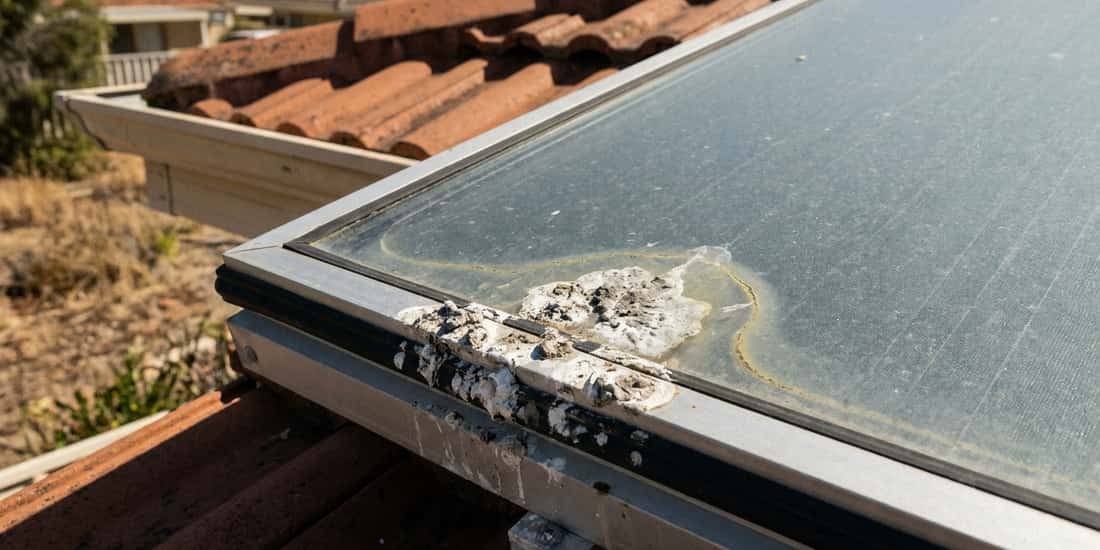
Droppings behave differently. They are opaque, concentrated and stubborn, and they sit on top of the glass rather than across it. A dropping the size of a fifty cent piece can block a cell almost entirely.
That matters because of how panels are wired. Cells within a panel run in series, so current through the string is limited by the worst performing cell. Block one cell heavily and it does not just remove its own contribution, it constrains what the healthy cells around it can deliver. Panels use bypass diodes to limit the damage, but a bypass diode works by isolating an entire section of the panel, so the fix itself costs output.
The practical result is that a small area of hard shading can cost far more than the same area of light dust. Homeowners are often surprised that a handful of visible marks shows up so clearly in their generation data.
Hot spots and longer term damage
There is a second issue that has nothing to do with today's kilowatt hours. A shaded cell that is being pushed by the rest of the string can start dissipating energy as heat instead of producing it. That localised heating is what the industry calls a hot spot.
Occasional shading is not a crisis. Droppings that sit on the same spot through a full Perth summer are a different matter. Repeated thermal stress in one location can, over time, contribute to cell degradation, discolouration behind the glass or damage to the encapsulant. It is a slow problem rather than a dramatic one, which is exactly why it goes unaddressed.
The sensible reading is not that a bird will destroy your array. It is that leaving hard soiling in place for months at a time is an avoidable risk with no upside.
What makes Perth conditions particularly awkward
Two local factors combine badly.
The first is the dry season. Perth goes long stretches with essentially no rain, and there is no natural rinse to help. Droppings that arrive in November are still there in February unless something removes them.
The second is heat. On a hot day the glass surface gets extremely warm, and organic material deposited on it does not simply dry, it bakes. What would wipe away in a minute when fresh becomes a hardened deposit bonded to the glass. Acidic content in droppings sitting on hot glass for months is not doing the surface any favours either.
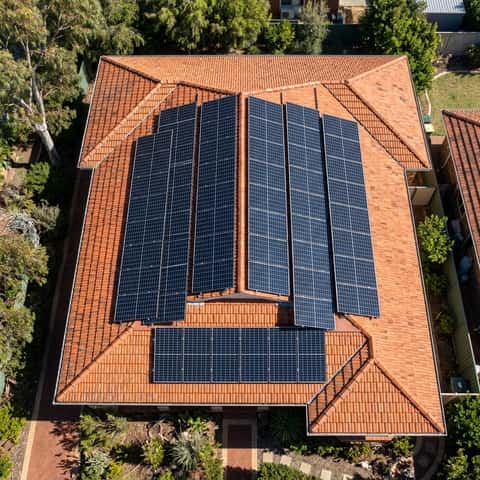
Add in the local bird life and the picture is familiar. Coastal suburbs deal with gulls. Established inner suburbs with mature trees get corellas, ravens and pigeons. Homes near powerlines, tall trees, aerials or a neighbouring roof ridge tend to sit under a regular perch, which is why droppings so often cluster on one section of an array rather than scattering evenly.
Why DIY removal is a bad trade
The instinct is to grab a ladder and deal with it. There are several reasons that is a poor decision.
Roof access is the biggest one. Falls from height are a leading cause of serious injury around the home. A tiled roof in Perth sun is hot, brittle underfoot and unforgiving. Cracked tiles are a common and expensive consequence of a well intentioned trip up there.
Standing on panels is not an option. Panel glass looks solid but the frame and mounting system are not designed to carry a person. Microcracks in cells do not announce themselves visually. They show up later as underperformance that nobody can explain.
Abrasives and scrapers destroy the surface. Most panels have an anti reflective coating on the glass. Scouring pads, scrapers, stiff brushes and abrasive powders take that coating off, and once it is scratched, output is permanently reduced. The panel then attracts and holds soiling more readily than it did before.
High pressure water is a real risk. Pressure washing can force water past seals and into junction boxes, and can stress the frame and glass edges. It is one of the fastest ways to turn a cleaning job into an electrical fault.
Thermal shock is easy to cause. Spraying cold water onto glass that has been baking all afternoon risks cracking it. Timing and water temperature matter more than people expect.
Warranty exclusions are common. Manufacturers typically specify acceptable cleaning methods, and damage caused by prohibited methods is usually not covered. Harsh detergents and solvents feature on those exclusion lists too, and residue from household cleaners can leave a film that attracts dust straight back.
Safe removal is dull by comparison. Soften the deposit with water, give it time, and lift it with a soft brush and appropriate water quality. No force, no chemistry, no scraping. Doing that safely at height is the part that warrants professional equipment.
Folding bird activity into a cleaning schedule
The most useful shift in thinking is to treat droppings as a frequency question rather than an emergency.
Start with a sensible baseline for your property, which depends on where you are, what surrounds you and how exposed the array is. Our guide on how often you should clean residential solar panels in Perth works through those variables in detail.
Then adjust based on evidence rather than guesswork. Your inverter or monitoring app is the tool for this. Compare like with like, clear day against clear day, and watch how quickly output declines after a clean. If your array recovers strongly after a clean and then falls off sharply within a couple of months, bird activity is likely a factor and the interval should shorten. If the decline is slow and gradual, dust is the main driver and the standard interval is fine.
Timing is worth thinking about too. A clean scheduled before the long dry stretch, when there will be no rain to help, tends to deliver better value than one timed arbitrarily. So does a clean after any period when you have noticed heavy activity around the roof.
Mesh and bird proofing is a separate trade
If birds are nesting under your panels rather than just perching above them, cleaning alone will not solve it. Nesting material under an array restricts airflow, holds moisture, attracts pests and creates a genuine fire consideration. The fix is physical exclusion, usually mesh clipped around the perimeter of the array.
That is specialist installation work and it is not something we perform. We are being straightforward about that because the sequencing matters: panels and roof should be cleaned before mesh goes on, and the mesh needs to be installed in a way that still permits future access for cleaning. Mesh fitted badly turns an easy clean into a difficult one for the life of the system.
If you want the cleaning side handled properly, and an honest account of what is actually happening on your roof, Purified Group’s Perth solar panel cleaning is the place to start.
Frequently Asked Questions
Do bird droppings really reduce solar output that much?
Yes, and usually more than an equivalent area of dust. Dust filters light across the whole panel, while droppings block it completely in one spot. Because cells in a panel are wired in series, a few heavily blocked cells can pull down the output of a much larger section of the array.
Can I just hose bird droppings off my solar panels?
Hosing from the ground is the least risky thing you can try, but it rarely shifts droppings that have baked on in Perth summer heat. Never spray cold water onto hot glass, and never climb onto a tiled or metal roof to reach them. Dried deposits usually need soaking and a soft brush at close range.
Will cleaning my own panels void the warranty?
It can. Most panel manufacturers specify what may and may not be used on the glass, and abrasive pads, scrapers, harsh chemicals and high pressure washing are commonly excluded. Damage traced back to those methods is generally not covered.
How often should Perth panels be cleaned if birds are a problem?
Start with a normal Perth schedule based on your location and surroundings, then add extra visits if your inverter data shows sharper drops between cleans. Homes near the coast, near large trees or under a regular flight path often need more frequent attention than the baseline.
Does Purified Group install bird proofing mesh?
No. Mesh and clip installation is a separate trade. We clean panels and can tell you what we see under the array, but physical bird proofing should be arranged with an installer who specialises in it.