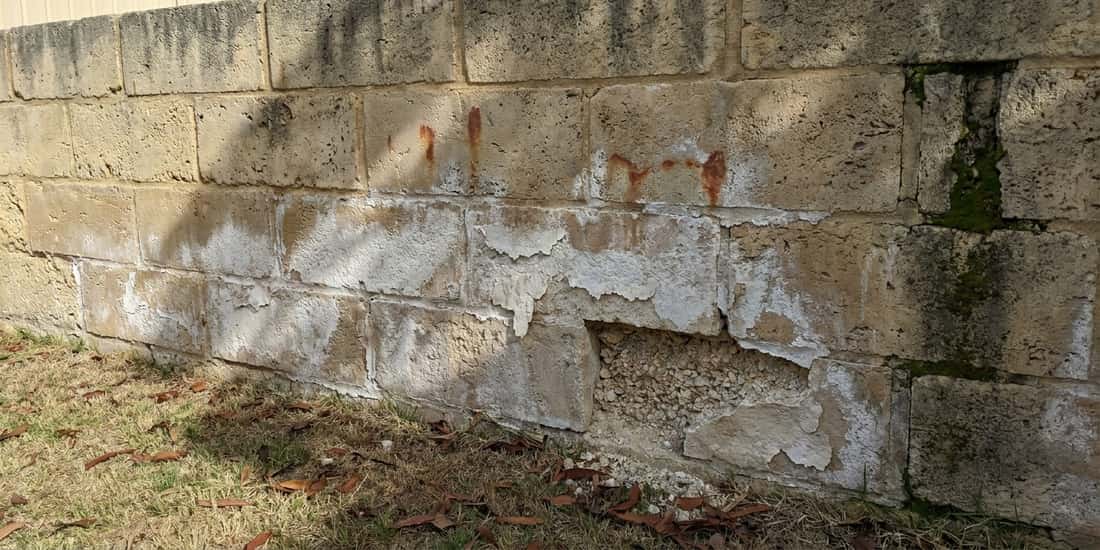
Limestone is everywhere in Perth. Retaining walls in the northern suburbs, crazy paving around pools, block walls along verges, driveways and paths in newer estates and older coastal streets alike. It suits the climate and the local geology, and it looks the part. What it is not is hard.
So yes, pressure washing can damage limestone, and it happens more often than most homeowners realise. The damage is usually done in the first ten minutes by someone holding the wrong nozzle too close, and it does not wash off afterwards. The good news is that limestone cleans beautifully when the method matches the material. Here is what actually causes the harm, and what safe cleaning looks like.
Why limestone is so vulnerable
Limestone is mostly calcium carbonate. It is soft, porous and slightly soluble, which is why caves form in it. The Tamala limestone that much of Perth sits on and builds with is no exception, and reconstituted limestone blocks (crushed limestone bound into a moulded block) are softer still in many cases.
Two features drive everything else. First, a weathered limestone surface develops a slightly harder outer skin over time, and the material immediately behind that skin is weaker. Break the skin and you are into softer stone that erodes fast. Second, the pore structure holds water, salts and organic growth deep below the surface, so the black or green staining you can see is often only the top of the problem.
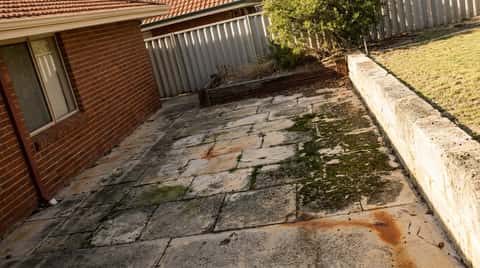
Add Perth's specifics and you have a stone under constant attack: salt laden coastal air, bore water carrying iron, reticulation wetting the same strip of paving every second day, and shaded south facing walls that stay damp long enough for lichen and moss to take hold.
What high pressure actually does to it
The damage falls into a handful of recognisable patterns.
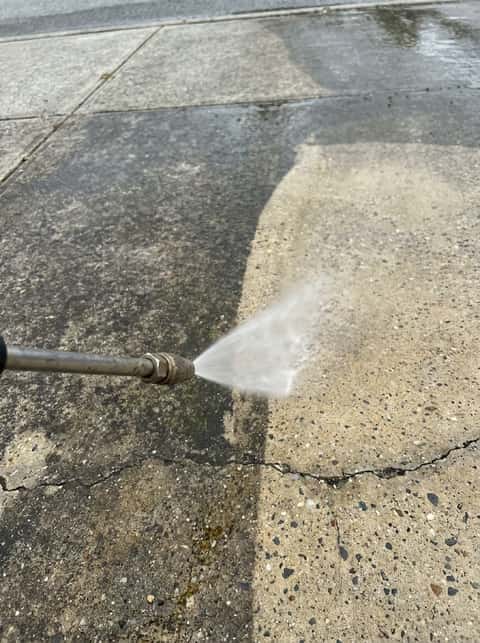
Pitting and etching. A narrow jet held close removes stone, not just dirt. The result is a rougher, more absorbent surface that then holds dirt more readily, so the driveway looks worse sooner after every subsequent clean.
Wand marks and striping. Overlapping passes with too much pressure leave a series of light and dark bands across paving. On limestone these are not just cleaning marks, they are shallow grooves in the stone, and no amount of rinsing will blend them out.
Exposed aggregate and a sandy feel. Once the surface skin goes, the binder around the aggregate goes with it. Reconstituted blocks start shedding fine sand and the crisp cut edges soften off.
Mortar and joint loss. Limestone walls are often laid with a soft mortar deliberately, so the wall can move without cracking the blocks. High pressure cuts that mortar out quickly. On paving, the same jet flushes jointing sand out from between units, which invites movement and weed growth later.
Water driven into the substrate. Blasting water into porous stone and behind wall faces mobilises salts. Weeks later you get efflorescence, a white bloom on the surface, or salt crystallising just below it and flaking the face off. This is the damage nobody connects to the clean, because it shows up long after the operator has left.
Turbo nozzles. A rotating zero degree nozzle is the single fastest way to ruin a limestone driveway. It leaves a spiral of scoured circles that stay visible for years.
What safe technique looks like
Effective limestone cleaning is mostly patience and chemistry, with water doing the rinsing rather than the cutting.
The pressure is kept at the low end of the machine's range. There is no universal magic figure to quote, because a well weathered wall in good condition and a friable block in the same garden will tolerate very different things. What matters is the pressure arriving at the stone, which depends on the nozzle, the distance and the speed of the pass as much as the gauge.
Practically, that means a wide fan tip rather than a pencil jet, the wand held well back, consistent distance and speed so the whole surface receives the same treatment, and generous water volume to carry the loosened soiling away. A surface cleaner attachment on flatwork helps enormously, because it fixes the distance and angle for you and eliminates striping.
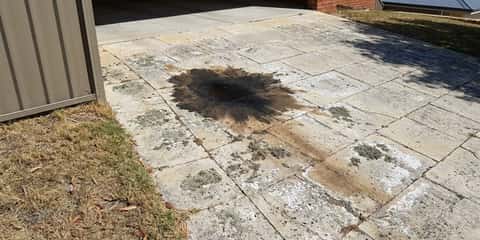
Chemistry does the heavy lifting. Organic growth (the black, green and grey staining that dominates Perth limestone) responds to a controlled sodium hypochlorite based treatment with proper dwell time, followed by a low pressure rinse. Let the solution kill the growth and it releases without force. Oily and traffic soiling wants an alkaline degreaser and agitation with a brush. What limestone must never meet is acid. Hydrochloric acid and most off the shelf brick cleaners dissolve the stone itself, leaving an etched, chalky finish that cannot be reversed.
Bore water iron staining is the trickiest category, because the products that shift rust are often acidic. It needs a specialist approach and a test patch, not a general purpose rust remover applied over a whole driveway.
Every job should start with a test patch in an inconspicuous corner, checked once it dries, before anything is committed to the visible areas.
How to tell if your limestone is already too far gone
Some surfaces should not be pressure cleaned at all, at any setting. Check for these before anyone turns a machine on.
- The thumb test. Rub a dry, unstained area firmly. If it powders, sheds sand or marks your skin, the surface is friable and pressure will remove material.
- Flaking and spalling. Faces lifting off in thin layers indicate salt or moisture damage already at work. Water pressure accelerates it.
- Hollow sound. Tap a block or paver. A hollow note suggests delamination behind the face.
- Open joints. Mortar raked back below the block face, or paving joints already empty of sand, means water will go straight into the structure.
- Previous acid damage. An unnaturally white, rough, sugary texture usually means the stone has been acid washed before and has no protective skin left.
Where any of these appear, the answer is a soft wash: cleaning solution applied at little more than garden hose pressure, allowed to dwell, agitated gently by hand where needed, then rinsed at low pressure. Sometimes it takes two visits to fully lift decades of biological growth. It is slower than blasting, and it leaves you with a wall or driveway still intact at the end.
Keeping the intervals sensible
The gentlest possible clean is the one you do before the staining sets hard. Organic growth caught early releases with chemistry alone. Left for years, it forces harsher methods on a surface that has been quietly weathering the whole time. A breathable sealer suited to limestone, applied only when the stone is dry through, buys further time by slowing absorption and regrowth. Reviewing how often you should pressure clean your driveway in Perth is worth doing alongside any decision about limestone, because frequency and technique are two halves of the same question.
If you are unsure which category your limestone falls into, get eyes on it before a machine goes near it. Purified Group’s Perth pressure cleaning team can assess the condition of your limestone, test an inconspicuous area and recommend either a low pressure clean or a full soft wash, so the stone comes up looking right without paying for it later.
Frequently Asked Questions
Can pressure washing damage limestone?
Yes. Limestone is a soft, porous stone, so high pressure or a narrow nozzle can pit the surface, leave visible wand marks, strip mortar joints and expose loose aggregate. Low pressure, a wide fan and the right chemistry avoid almost all of that.
What pressure is safe for cleaning limestone?
There is no single safe number, because condition matters more than the gauge reading. As a rule, limestone is cleaned at the low end of a machine's range with a wide fan tip held well back from the surface, letting water volume and cleaning solution do the work rather than force.
Should I use acid or brick cleaner on limestone?
No. Hydrochloric acid and most supermarket brick cleaners dissolve the calcium carbonate that limestone is made of. That leaves an etched, chalky, permanently rough surface. Limestone needs neutral or alkaline products, or a controlled sodium hypochlorite treatment for organic growth.
How do I know if my limestone is too degraded to pressure clean?
Rub a dry patch firmly with your thumb. If it powders, sheds sand or leaves a dusty mark, the surface skin has already broken down and pressure will remove more material. Flaking faces, hollow sounding blocks and raked out joints are the same warning.
Does limestone need sealing after cleaning?
It is not compulsory, but a breathable sealer suited to limestone slows down staining and organic regrowth, which means longer gaps between cleans. Sealing must happen only once the stone is genuinely dry through, not just dry on top.