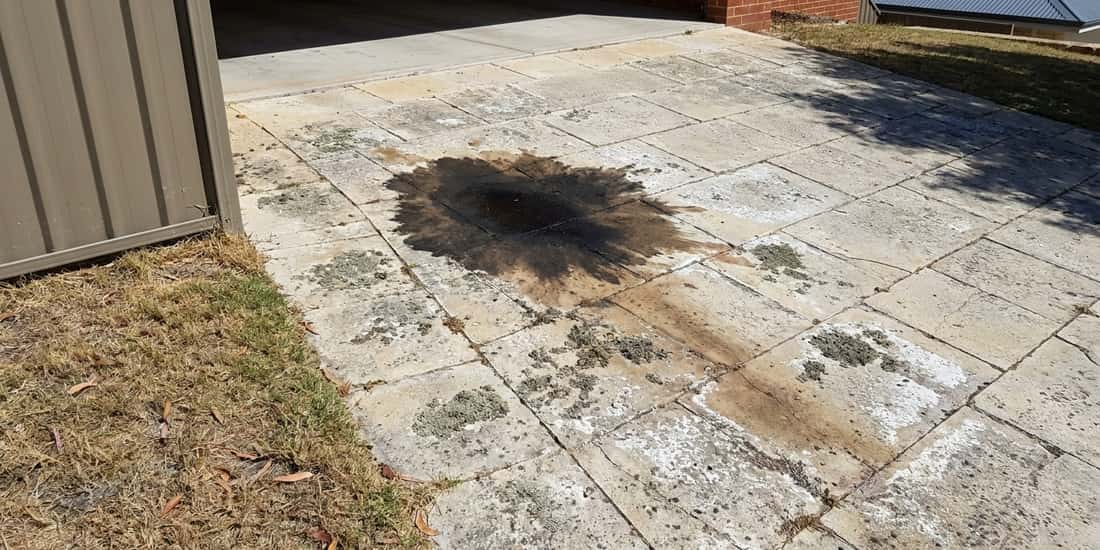
Oil stains are the one driveway mark that will not weather away. Sun, rain and reticulation overspray will fade tyre marks and lichen given enough time, but a hydraulic leak or a sump drip works in the opposite direction. It sinks. And in Perth, the outcome depends heavily on what your driveway is actually made of, because concrete and limestone respond to cleaning products in completely different ways.
Work out your substrate before you buy anything
Most Perth driveways fall into one of three groups: plain or exposed aggregate concrete, limestone or reconstituted limestone pavers, and clay or concrete brick pavers.
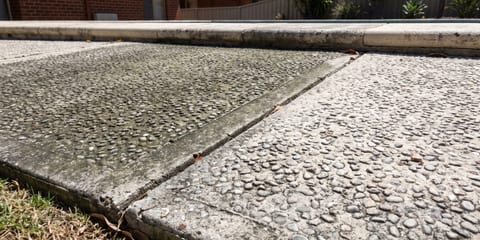
Concrete is alkaline and reasonably tolerant. It handles strong degreasers, hot water and moderate pressure without complaint. Its weakness is porosity: an unsealed slab drinks oil, so what you see on the surface is a fraction of what is in the slab.
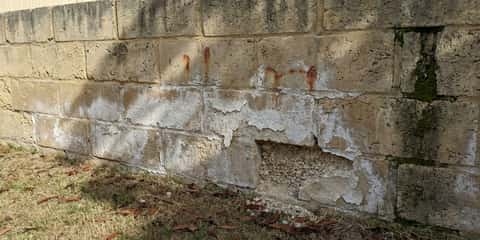
Limestone is the one to be careful with. It is calcium carbonate, which means acid dissolves it. Any product marketed as a "concrete cleaner" containing hydrochloric or phosphoric acid will etch limestone, leaving a dull, chalky patch that looks worse than the stain. Limestone is also soft, so a turbo nozzle held too close will carve visible tracks into it in seconds.
Brick pavers sit between the two. The bricks themselves usually tolerate degreaser, but the jointing sand does not, and aggressive pressure will strip the joints out and leave you re-sanding the whole area afterwards.
If you are unsure, dab a drop of white vinegar somewhere hidden. Vigorous fizzing points to a limestone-based product. Treat it accordingly.
The first 24 hours matter more than the product
Fresh oil sitting on the surface has not yet penetrated. Your priority is absorption, not scrubbing.
Cover the spill generously with cat litter, sawdust, sand or diatomaceous earth. Crush it underfoot to increase contact, and leave it for several hours or overnight. Sweep it up into a bag and put it in the general waste bin, not the green bin and not down the drain.
Only then do you start on what is left. Scrubbing first just drives the oil deeper into the pores and widens the stain.
What actually works on concrete
For the residual shadow, an alkaline degreaser applied neat, agitated with a stiff bristle broom and left to dwell for ten to fifteen minutes will handle most kitchen oil, cooking fat and light motor oil. Do not let it dry on the surface; mist it with water if the sun is on it.
For older, set-in stains, a poultice does more than any amount of scrubbing. Mix an absorbent powder with a solvent or degreaser to a paste roughly the consistency of peanut butter, spread it about five millimetres thick over the stain, cover with plastic taped at the edges, and leave it for a day or two. As it dries it pulls oil up out of the slab rather than pushing it down. Two or three rounds on a deep stain is normal.
Enzyme and microbial cleaners are the slow option, but they genuinely digest hydrocarbons rather than just moving them. They need warmth and moisture and several days. Perth summers suit them well.
One thing to plan for: a spot-cleaned patch on a weathered slab often ends up noticeably lighter than everything around it, so you swap a dark mark for a pale one. Work out to the nearest control joints or paver edges and clean the whole panel, and the result reads as intentional rather than as a repair.
What to avoid on limestone
Skip acids entirely. Skip anything that says "brightener" or "rust remover" without checking the ingredients. Use a pH-neutral or mildly alkaline degreaser, work it in with a soft brush rather than wire, and rinse thoroughly so nothing dries in the pores.
Accept that limestone may not come fully clean. Its open structure holds oil tenaciously and its pale colour makes any residue obvious. Fading a stain to the point where it reads as normal variation is often the realistic goal, and a much better outcome than a permanently etched patch.
Where the water goes
This is the part most DIY guides ignore. Perth's stormwater system largely discharges without treatment into drains, sumps, wetlands and eventually the ocean. Local governments prohibit putting pollutants, including oily wash water and degreaser, into that system.
In practice: block the downhill edge of the work area with a sand snake or old towels, contain the rinse water, and either soak it up with absorbent material for the general waste bin or divert it onto a garden bed or lawn where soil can filter it. Never sweep it towards the kerb. If you are dealing with a large or heavy spill, check your council's requirements first.
When the stain is beyond DIY
Some jobs will not respond to cold water and a broom. Deep hydraulic fluid, long-standing sump drips on an unsealed slab, or a large area of accumulated traffic film all sit in that category.
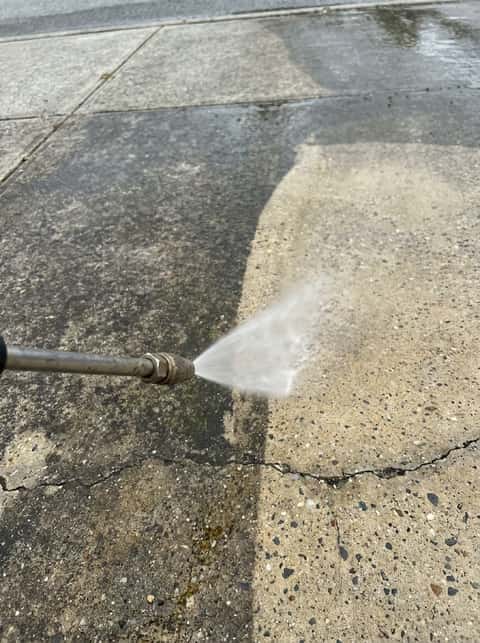
Hot water pressure cleaning changes the equation because heat lowers oil viscosity and lets it release from the pore structure rather than simply being blasted around. Paired with a rotary surface cleaner, it also delivers even coverage, which avoids the zebra striping that a hand-held wand leaves across a large driveway. On limestone, professional operators can dial pressure back and lean on heat and chemistry instead of brute force.
Getting the substrate assessed before anything is applied is worth more than any product recommendation, and it is where Purified Group’s Perth pressure cleaning starts on every driveway.
Stopping the next one
Once the surface is clean and completely dry, a penetrating sealer buys you hours rather than minutes to get an absorbent onto the next spill. It wears thinnest in the wheel tracks, which is exactly where drips land, so that strip is worth a look each year. A drip tray under a known leak costs almost nothing and saves the whole exercise.
Beyond that, the best defence is not letting grime build to the point where new marks blend into a general dinginess. Working out a sensible schedule for your surface and your exposure is covered in our guide on how often you should pressure clean your driveway in Perth.
Frequently Asked Questions
Does bleach remove oil stains from a driveway?
No. Bleach may lighten the surrounding surface so the stain looks less obvious, but it does nothing to break down oil. It can also damage nearby plants and lawn when it runs off. A dedicated degreaser or an absorbent poultice is a far better use of your time.
Can I use a pressure washer on a limestone driveway?
Yes, but only at low pressure with a wide fan tip and no turbo nozzle. Limestone is soft and porous, so concentrated pressure will pit the surface and leave permanent wand marks that are more visible than the original stain.
Why does the oil stain come back after cleaning?
Concrete is porous, so oil soaks well below the surface. Cleaning the top layer removes what you can see, but residual oil can wick back up as the slab warms. Repeat poultice treatments draw out more of the deeper contamination.
Is it legal to hose oil residue into the street drain in Perth?
Stormwater drains in Perth generally discharge untreated to waterways and the ocean, and local governments prohibit putting pollutants into them. Contain and absorb the residue instead, and check your council's requirements before washing down any driveway.
How old is too old for an oil stain to be removed?
Age matters less than depth. A shallow stain from years ago may lift readily, while a fresh spill that has soaked into an unsealed slab may only fade. Professional hot water cleaning with a surface cleaner usually achieves the best realistic result.