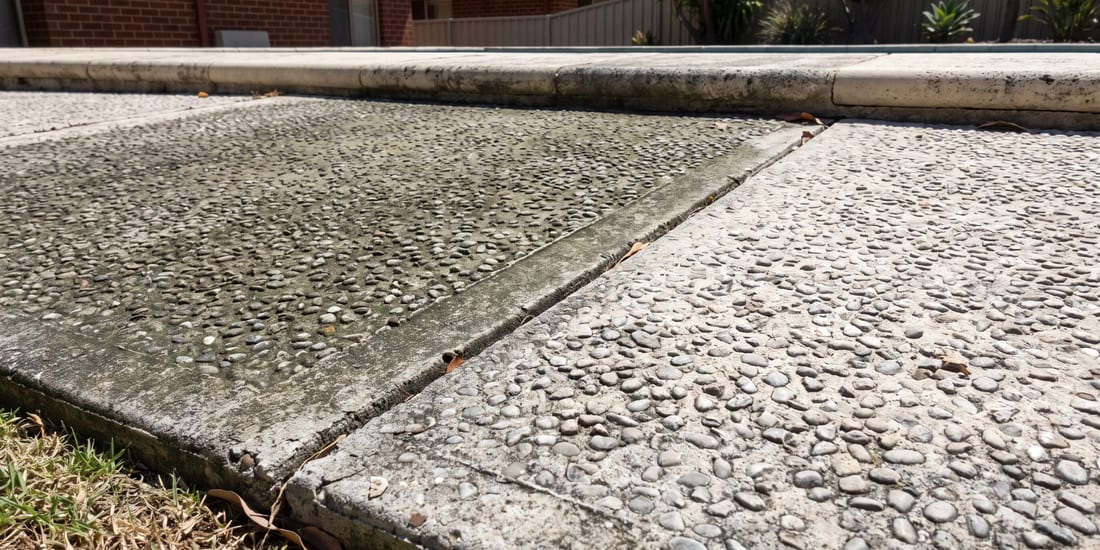
Exposed aggregate is everywhere in Perth. It is the default for new driveways, alfresco slabs and pool surrounds, partly because it hides dust better than smooth concrete and partly because the texture gives it some grip when wet. That same texture is why it cannot be cleaned the way a plain concrete path is cleaned. The surface is a field of small valleys, and everything that lands on it settles into those valleys and stays.
Done properly, exposed aggregate cleaning is less about pressure and more about method. Done badly, it leaves pale streaks, loose stones and a surface that looks worse at the end than it did at the start.
Why exposed aggregate gets dirty differently in Perth
Most of Perth sits on a sand base with a high limestone content, and that fine, pale dust gets everywhere. On a smooth surface, a hose or a decent rain event moves it. On aggregate, it washes down into the gaps between the stones and packs in. The slab does not look dirty so much as it looks flat and grey, with the stone colour muted. Owners often assume the concrete has simply aged. Frequently it has not: it is wearing a thin layer of its own surroundings.
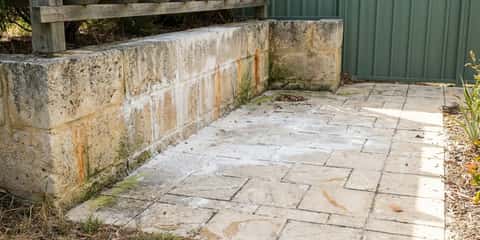
Coastal suburbs add salt. Salt-laden air deposits on the surface, draws moisture and leaves a faint white bloom that sits on top of, and sometimes mixes with, efflorescence pushing up from within the slab. The result is a chalky cast that resists a garden hose completely.
Then there is sun. Perth’s UV load is punishing, and it does two things to aggregate. It ages any sealer that has been applied, so topical coatings cloud, yellow or flake over time. It also bakes organic staining into the surface, so leaf tannin from a jacaranda or a gum, or a spill left over summer, sets far harder than the same mark would in a cooler climate.
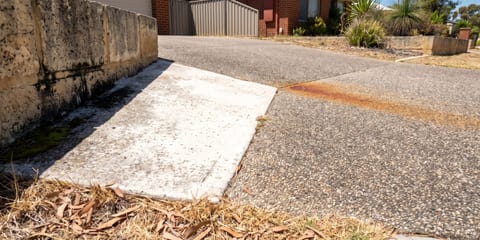
Reticulation is the one most people overlook. Overspray that lands on the edge of a driveway does two things at once. If the system runs off bore water, dissolved iron oxidises on the surface and leaves the familiar orange staining that will not budge with pressure alone. And regardless of water source, a strip of concrete that gets watered three mornings a week is a strip of concrete that stays damp, which is exactly the condition algae and lichen need. That is why so many Perth driveways are clean in the middle and green along one edge.
The safe method for aggregate specifically
The key distinction is this: on exposed aggregate, chemistry lifts the soiling and pressure rinses it away. On plain concrete you can get away with reversing that. Here you cannot, because the only thing holding those decorative stones in place is the cement matrix around them, and that matrix is exactly what excessive pressure erodes.
A sound process looks like this.
Pre-wet the surface. A dry slab absorbs cleaning solution unevenly, which is how striping happens. Wetting it first keeps the product sitting where it is meant to work.
Apply a suitable cleaner and let it dwell. For general grime and algae on concrete, an alkaline or sodium hypochlorite based product at an appropriate dilution does the work, given time. Dwell time is the part everyone skips. Ten minutes of chemistry saves a great deal of unnecessary pressure.
Agitate where needed. A stiff broom or brush works the solution down into the gaps between the stones. This matters on aggregate more than on any other surface, because the soiling is not on the surface, it is below the high points.
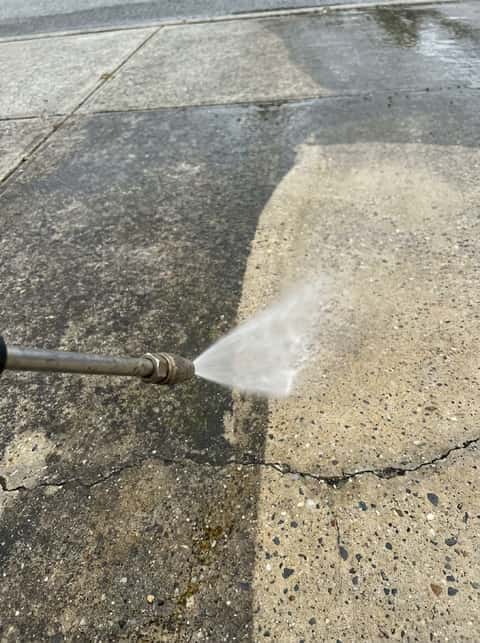
Rinse with control. Use a wide fan nozzle rather than a narrow jet. Keep the tip well back from the surface, a good 300mm or more, and keep it moving in overlapping passes at a consistent angle. A rotating surface cleaner can work well on large open areas because it delivers an even pass and takes the operator’s hand out of the equation, but it needs the right pressure setting behind it.
What dislodges stones is predictable: a narrow or turbo nozzle, held close, held still. A zero degree tip at close range will blast the cement from around a stone in seconds and leave a visible pit. Changing the angle so the water drives into the face of the aggregate rather than sweeping across it does similar damage more slowly. If you see grit and small stones in the runoff, stop. That is the slab coming apart, not dirt leaving it.
Two other watchpoints. If the aggregate is sealed, the approach softens again: milder chemistry, lower pressure, and no aggressive agitation, because the coating will mark before the concrete does. And the wash water has to go somewhere sensible. Around a pool surround in particular, solution running into the pool or into garden beds is a real problem that needs managing before the first drop is applied.
How often it actually needs doing
For an average Perth driveway in reasonable sun, roughly once a year keeps it looking the way it is meant to look. That is enough to clear the limestone dust, the road film and whatever has started greening at the edges before it establishes.
Some areas need it more often, closer to every six months:
- South facing driveways and anything shaded by a wall, carport or dense tree canopy, where the surface stays damp through winter
- Strips that catch reticulation overspray
- Pool surrounds, which deal with sunscreen, body oils, splash-out and foot traffic in a way driveways do not
- Anywhere under a tree that drops fruit, berries or heavy leaf litter
Timing matters too. Algae growth kicks along through Perth’s wet winter months, so a clean heading into or coming out of winter tends to deliver the most visible result. A clean in the middle of a dry summer deals with dust and staining rather than growth. If you are weighing up frequency across your whole property, the broader question of how often you should pressure clean your driveway in Perth covers the full picture.
What actually damages exposed aggregate
Three things cause most of the damage we see described on aggregate surfaces.
Acid. Hydrochloric acid, sold variously as brick acid or concrete cleaner, is a popular shortcut for efflorescence and stubborn staining. It attacks the cement matrix, which is the whole structural point of an aggregate surface. It can also dull the stone faces, leaving a washed out, slightly chalky look that no amount of later cleaning restores. Once the matrix is etched, stones loosen, and loose stones do not go back.
Concentrated bleach. Household bleach straight from the bottle is not a stronger version of a professional cleaner, it is an uncontrolled one. It will damage an existing sealer, kill the lawn and garden beds it runs into, corrode nearby fixtures and fittings, and leave a bleached patch where it pooled. Correct dilution and adequate dwell time achieve more, with none of that.
Pressure held in one spot. Even a moderate machine will cut concrete if the operator pauses. The classic sign is a cleaner but obviously lighter rectangle at the start of each pass, where the wand was set down before it began moving, or a scalloped edge along the side of a path. On aggregate the damage goes further because material is physically removed.
Where sealing fits, and what we do not do
Sealing comes up in almost every conversation about exposed aggregate, so it is worth being direct.
Purified Group cleans exposed aggregate. We do not seal it. Sealing is a separate trade with its own products, surface preparation standards, weather windows and warranty considerations, and it should be handled by a contractor who does it properly and stands behind the result. We are not going to sell you a coating as an add-on to a wash.
What is worth understanding is how the two relate. A sealer is a barrier, either a penetrating product that soaks in and repels moisture without changing the look much, or a topical coating that sits on the surface and usually adds some sheen. Either way it reduces how readily dirt, oil and organic matter take hold, and it makes subsequent cleaning easier. What it does not do is clean anything. If a sealer goes on over a slab that still has algae, bore water staining or embedded dust in it, that soiling is now locked under a coating and the only way out is to strip the lot and start again.
So cleaning comes before sealing, always. And cleaning is not a substitute for sealing either. A thorough clean restores appearance, it does not add protection. If your aggregate has an existing coating that is flaking, clouding or peeling under Perth sun, the fix is a sealing contractor’s job, not a harder wash.
When to stop and call someone
There is nothing wrong with a careful homeowner maintaining their own aggregate with a broom, the right product and a sensible nozzle. The point to stop is reasonably clear.
Call a professional if you can see stones lifting or grit in the runoff, because the surface is already being damaged and the method needs to change. Call if you are dealing with established lichen, which bonds hard and does not surrender to pressure. Call for bore water staining, oil, rust or tannin marks, all of which need targeted treatment rather than more force. Call if the slab is sealed and you do not know what with, because the wrong product will mark it. And call if the area is a pool surround with nowhere safe for wash water to go, or if it is large enough that inconsistent passes will leave an obvious patchwork.
If your exposed aggregate has gone flat, green at the edges or chalky with salt, a correctly specified clean will bring the stone colour back without taking anything with it. You can get a straight answer on method, timing and what the surface actually needs through Purified Group’s Perth pressure cleaning team.
Frequently Asked Questions
Can you pressure clean exposed aggregate without dislodging the stones?
Yes, provided the pressure is kept well below what plain concrete tolerates, a wide fan nozzle is used, the tip is held well back from the surface and the wand never stops moving. Stones come loose when a narrow jet is held close and static, eroding the cement matrix that holds them.
How often should exposed aggregate be cleaned in Perth?
Most Perth driveways look right with a clean roughly once a year. Shaded areas, pool surrounds, and anything sitting in reticulation overspray often need it every six months because algae and mineral staining build up faster there.
Does Purified Group seal exposed aggregate?
No. Purified Group cleans exposed aggregate but does not apply sealers. Sealing is a separate trade with its own products and warranties, and it is worth engaging a dedicated concrete sealing contractor for it.
Will acid or bleach clean exposed aggregate faster?
Faster, yes, but at a cost. Acid etches the cement matrix between the stones and dulls the stone faces, while concentrated bleach can damage an existing sealer, burn adjacent garden beds and corrode nearby metal. Correct chemistry plus dwell time does the same job without the damage.
Do I need to clean exposed aggregate before sealing it?
Yes. A sealer locks in whatever is underneath it, so any algae, dirt or staining left on the surface becomes permanent until the coating is stripped. Cleaning comes first, always.