Green mould on paving is one of those jobs Perth homeowners keep putting off, partly because the advice online is so thin. Vendor pages push a bottle of something. Forum replies say "just pressure wash it." Neither tells you that the method safe for a concrete driveway can permanently scar limestone, or that the patch behind the shed will be green again by spring unless you deal with why it grew there.
Here is a more careful way to think about it.
What the green stuff actually is
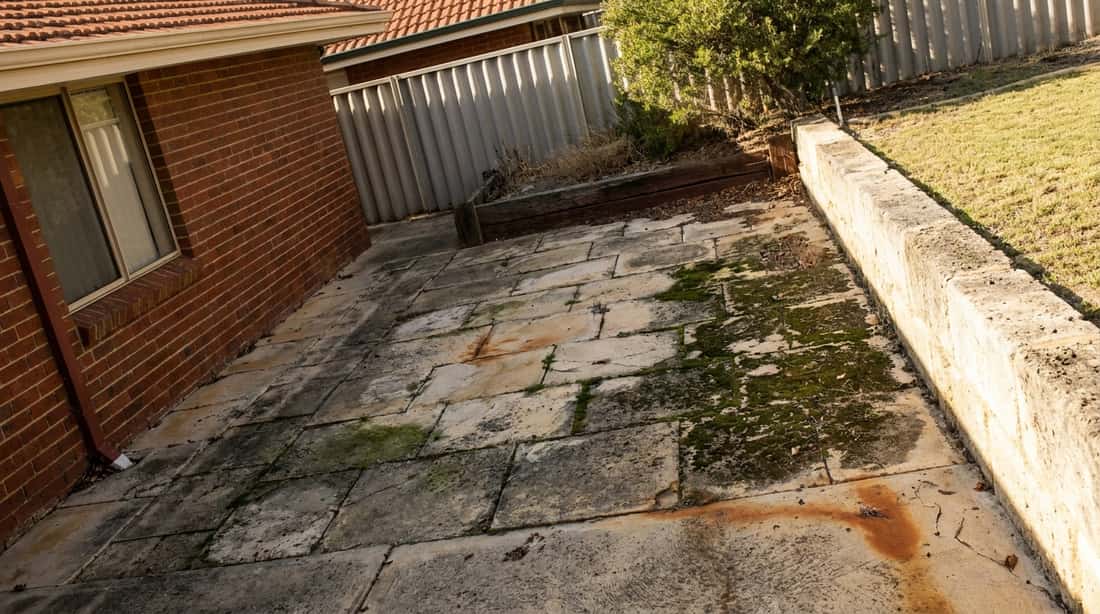
Most of what people call green mould on paving is not mould at all. It is a mix of algae, cyanobacteria and early stage lichen colonising the pores of the surface. Algae arrives first as a slick green film that darkens when wet. It needs three things: moisture, shade or low light, and something organic to feed on, such as leaf litter, pollen, lawn clippings or dust.
Lichen is the tougher one. It shows as grey, white or pale green crusty discs that grip hard and often leave a shadow behind even after cleaning. Black spotting on paving is usually a different organism again, and it tends to be far more stubborn than green film.
The distinction matters because the softer green film releases with relatively gentle treatment, while lichen and black spot need dwell time from a chemical treatment rather than more pressure. Reaching for a stronger nozzle when a treatment would have worked is how paving gets damaged.
Why Perth paving grows it back so quickly
Perth's climate looks hostile to mould, and for a few months of the year it is. Our summers bake exposed paving dry. But most of the greening happens in specific microclimates that stay damp regardless of the season.
The most common culprit is reticulation. A sprinkler head that throws a fine mist across the edge of a path keeps that strip wet several times a week, all summer, while the rest of the paving dries in minutes. Add the south side of a house, a patio under a patio cover, or paving shaded by a jacaranda or a lemon tree, and the surface never fully dries out.
Winter rains then do the rest. Between June and August, shaded paving in a Perth backyard can stay damp for weeks. Coastal suburbs add salt-laden humidity to the mix, and sandy soils with poor surface fall let water pool at low points rather than drain away.
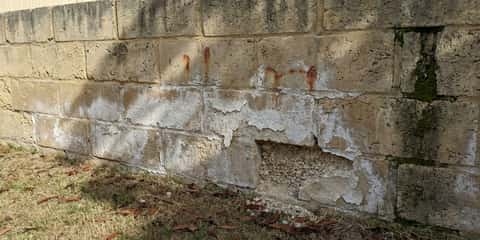
Material plays a part too. Limestone is highly porous and holds moisture inside its surface, which is why limestone retaining walls and crazy paving green up faster than a smooth concrete slab in the same yard.
Know your paving before you touch it
This is where most generic advice fails. Different surfaces tolerate different treatments.
Limestone paving and walls are soft, porous and calcium based. Acidic cleaners, including brick acid and many "instant" driveway products, react chemically with limestone and can leave etching, whitening or a pitted surface that cannot be reversed. High pressure held close will erode the face of the stone and round off crisp edges.
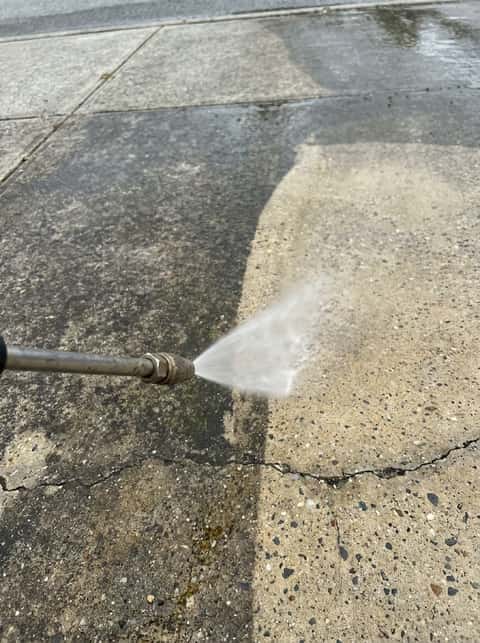
Poured concrete and concrete pavers are more robust, but older concrete with a weathered surface can be etched or left with visible wand marks if the nozzle is too narrow or held too long in one spot. Coloured or stamped concrete is more sensitive again, because the colour often sits in the top layer.
Exposed aggregate looks tough because of the stones, but the cement binder between them is the weak point. Aggressive cleaning strips that binder, loosens stones and leaves a rough, dusty finish that traps more dirt than it did before.
Clay brick pavers cope reasonably well with cleaning, but the jointing sand between them does not. Blast it out and you get movement, weeds and uneven paving. The same applies to grouted travertine or tile, where high pressure will chew out the grout line long before it damages the tile.
A safe DIY method
If the mould is light green film on sound paving, this sequence gives you the best result for the least risk.
- Clear the surface. Sweep away leaves, sand and debris. Anything organic left behind is food for the next bloom.
- Wet everything down. Pre-wetting the paving and, importantly, the surrounding lawn and garden beds reduces how much cleaning solution soaks into either.
- Apply a treatment and let it work. A mild diluted bleach solution or a proprietary mould and algae cleaner suited to your surface will do the heavy lifting if you give it dwell time. Do not let it dry on the surface in the sun. Test an out of sight corner first.
- Agitate gently. A stiff broom is enough for green film. Wire brushes score soft stone.
- Rinse thoroughly. Flush the surface and rinse plants and adjacent lawn again as you go.
- Fix the moisture source. Adjust the offending sprinkler, prune back low branches, clear the gap that lets water pool.
If pressure washing is warranted, use the widest fan tip that will do the job, keep the nozzle well back, move in steady overlapping passes and never stop in one place. Consistent distance matters more than power. A surface cleaner attachment gives a far more even result on flat paving than a hand-held wand.
Where DIY goes wrong
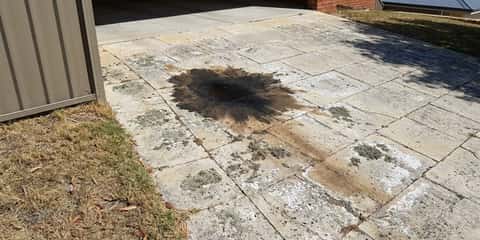
The failures we see written about are consistent: zebra striping on concrete from uneven wand work, halos where a strong chemical was spotted onto one patch, greyed limestone, aggregate turned raw and rough, jointing sand washed into the garden bed, and mould that returned within a month because only the visible green was removed and not the spores in the pores.
There is also the question of frequency. Cleaning too often, or too aggressively, wears paving faster than the weather does. Our guide on how often you should pressure clean your driveway in Perth works through sensible intervals for local conditions.
Making the clean last
A clean surface is the start, not the finish. Once paving is properly cleaned and fully dry, a nanocoating or penetrating sealer reduces how much water and organic matter the surface absorbs. Porous limestone benefits most, because less moisture held in the stone means faster drying and less for algae to establish in. Regrowth still happens eventually, but it takes longer and the next clean is easier.
Combine that with practical changes: redirect the sprinkler, thin the canopy overhead, keep leaf litter off shaded paving through winter.
If your paving is limestone, exposed aggregate, grouted, or already showing lichen and black spotting, the risk of doing damage outweighs the satisfaction of a Saturday hire. Correct pressure, the right chemistry for the material and proper containment of runoff are what separate a clean from a costly repair. If you would rather not gamble on your paving, Purified Group’s Perth pressure cleaning team can assess the surface, treat it appropriately and talk you through whether a protective coating makes sense for your yard.
Frequently Asked Questions
Will bleach damage my limestone paving?
A well diluted bleach solution, applied briefly and rinsed thoroughly, is generally safer on limestone than acidic cleaners, which react with the stone and can leave permanent etching. Always test a hidden corner first, wet the surrounding area before you start, and keep the solution away from lawn and garden beds.
Why does green mould keep coming back on the same patch of paving?
Because the conditions that grew it are still there. Shade, retained moisture from reticulation or poor drainage, and organic debris from overhanging trees will re-seed the same spot within weeks. Fixing the moisture source matters more than how hard you scrub.
Can I use a pressure washer on paving without damaging it?
Yes, if the pressure, nozzle and distance suit the material. Problems arise when a narrow nozzle is held close to soft limestone, aged concrete or exposed aggregate, which can erode the surface, strip binder from around the stones or blast out jointing sand between pavers.
Does sealing or nanocoating stop mould growing back?
It will not stop growth entirely, but a properly applied coating reduces how much water the surface absorbs, so mould has less to hold on to and the paving dries faster after rain or watering. Cleaning also becomes easier next time around.
How long does paving take to dry before it can be sealed?
Porous surfaces such as limestone hold moisture well after they look dry, so sealing usually waits for a run of dry weather following the clean. Applying a coating over trapped moisture can cause clouding or poor adhesion.