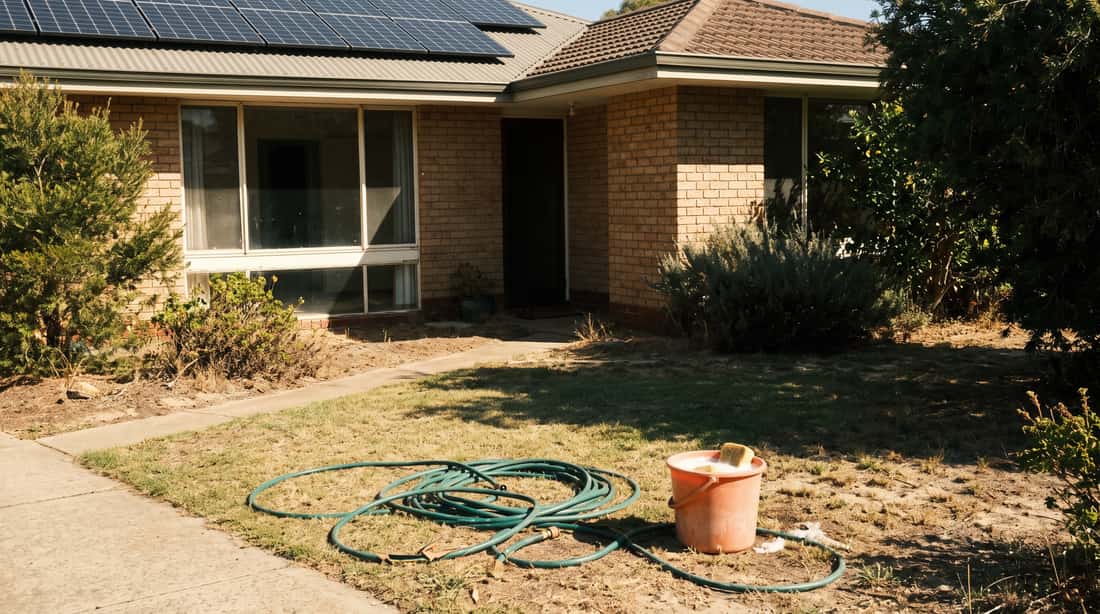
YouTube is full of homeowners with garden hoses scrubbing their own solar panels. It looks easy enough on a five-minute tutorial. Stand on a ladder, point a hose, give them a wipe with a sponge, job done. Save yourself the cost of a professional clean.
The problem is that this approach can put your warranty at risk, damage your panels permanently, and land you in hospital with a fall injury. We have been called out to dozens of Perth homes where well-meaning DIY cleaning caused expensive long-term issues. Here is what every homeowner should know before deciding between doing it yourself and hiring a professional.
The Three Real Risks of DIY Solar Cleaning
Risk 1: Voiding Your Panel Warranty
Panel manufacturers set conditions on how their products can be accessed and cleaned, and walking on the panels is one of the things their installation and maintenance guidance typically warns against. Terms differ between brands and between models, so the only reliable answer for your own array is the documentation that came with it. What is consistent is the risk: if a claim is ever assessed and there is evidence the panels were walked on or cleaned in a way the manufacturer advises against, that becomes a problem you do not want to be arguing about.
Most DIY cleaning involves at least stepping on one panel to reach the next row across, even if you are careful. Panel warranties commonly run to twenty or twenty-five years and the replacement value runs into thousands, so it is a lot to put at risk for one afternoon's work.
Risk 2: Damaging Anti-Reflective Coatings
Modern solar panels have anti-reflective coatings on the glass that improve light absorption and boost output by several per cent. These coatings are sensitive to abrasive scrubbing, alkaline detergents, and acidic cleaning products.
Household cleaning sprays, dishwashing liquid, vinegar, and even general-purpose surface cleaners can strip or etch these coatings permanently. Once the coating is damaged, output drops by a few per cent forever and you cannot restore it with any amount of subsequent cleaning. The damage is mechanical and chemical, not surface dirt.
Risk 3: Personal Injury
This is the one most homeowners downplay until something goes wrong. Roof falls are one of the most common serious injuries in Australian home maintenance, sending thousands of people to hospital every year. Tile roofs in Perth get hot, dusty, and brittle with age. Add water from a hose to that surface and the slip risk becomes significant.
According to Safe Work Australia, falls from height are a leading cause of serious workplace injury, and home roof access carries similar physical risks. A professional clean uses ground-based water-fed poles exclusively, which means nobody goes near the roof in the first place. The job is done from terra firma.
What Household Tap Water Actually Does to Your Panels
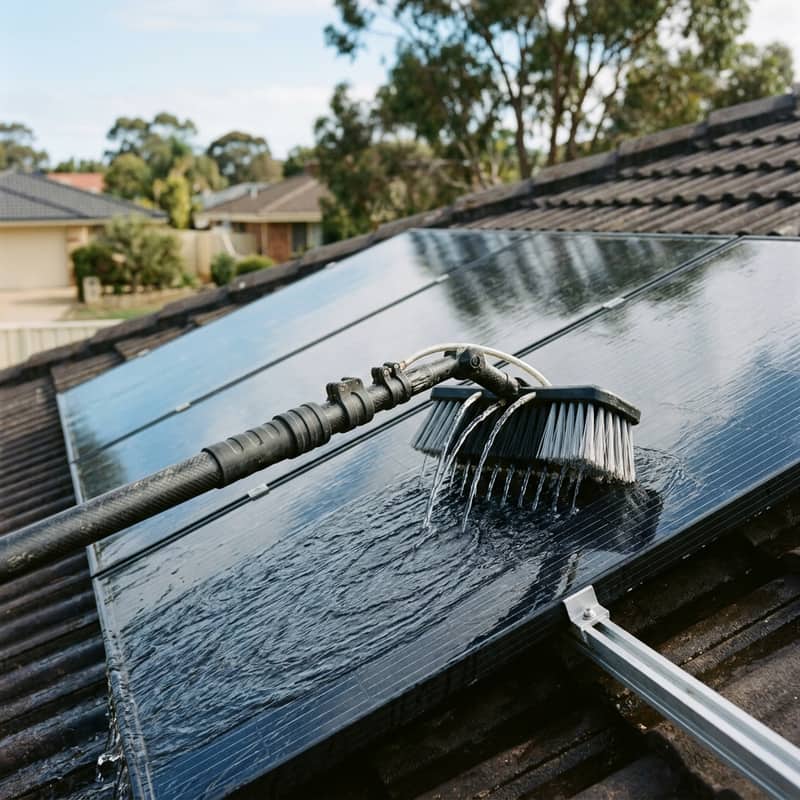
Most homeowners do not realise that Perth tap water is not suitable for cleaning solar panels. There are two reasons this matters more than you would expect.
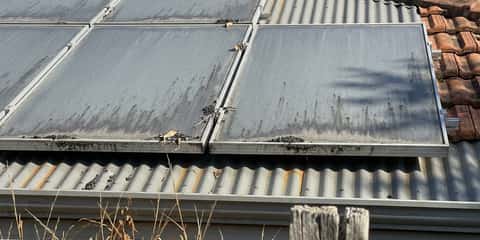
First, Perth water has a relatively high mineral content. Calcium, magnesium, and dissolved salts in the water leave deposits when the water dries on the panel surface. Those deposits are visible as streaks, spots, and a hazy film: exactly the same problem you were trying to fix in the first place. You make the panels look worse rather than better.
Second, tap water reacts with the airborne dirt already on the panel. Instead of lifting the dirt off cleanly, it can chemically bond some compounds harder to the glass, making the next clean more difficult and increasing the risk of needing chemical treatment later.
Professional pure water systems remove all minerals from the water using reverse osmosis and deionisation filters in sequence. Pure water dries with zero residue and actively lifts dirt off the surface instead of bonding to it. It is a fundamentally different chemistry to what comes out of your tap.
The Tools Professionals Use That You Cannot Replicate at Home
Beyond pure water, professional cleaning relies on equipment that homeowners cannot reasonably DIY:
- Telescopic water-fed poles reaching 30 feet or more, allowing ground-based cleaning of even tall double-storey roofs
- Soft monofilament brush heads designed for solar glass that will not scratch coatings or seals
- Filtered pure water tanks mounted in service vans with high-volume delivery for whole-array cleaning
- Adjustable pressure settings calibrated to lift dirt without damaging cell seals or junction boxes
The setup cost for proper equipment runs into tens of thousands of dollars per service vehicle. It is part of why this is a service industry rather than something most homeowners can practically buy and own themselves.
When DIY Might Actually Be OK
To be fair, there are very limited scenarios where light DIY rinsing is acceptable. If you have a single-storey home, a low-pitch tile roof you can safely reach from a stable ladder without stepping on the panels themselves, and access to demineralised water (sold at supermarkets or auto parts shops in 20L drums), you can rinse light dust from accessible edges using a soft microfibre on an extendable telescopic pole.
Note all the conditions in that sentence. They are restrictive for a reason. Anything beyond a quick rinse of accessible panel edges should be left to professionals with proper equipment and insurance.
What a Professional Clean Costs vs the Risks of DIY
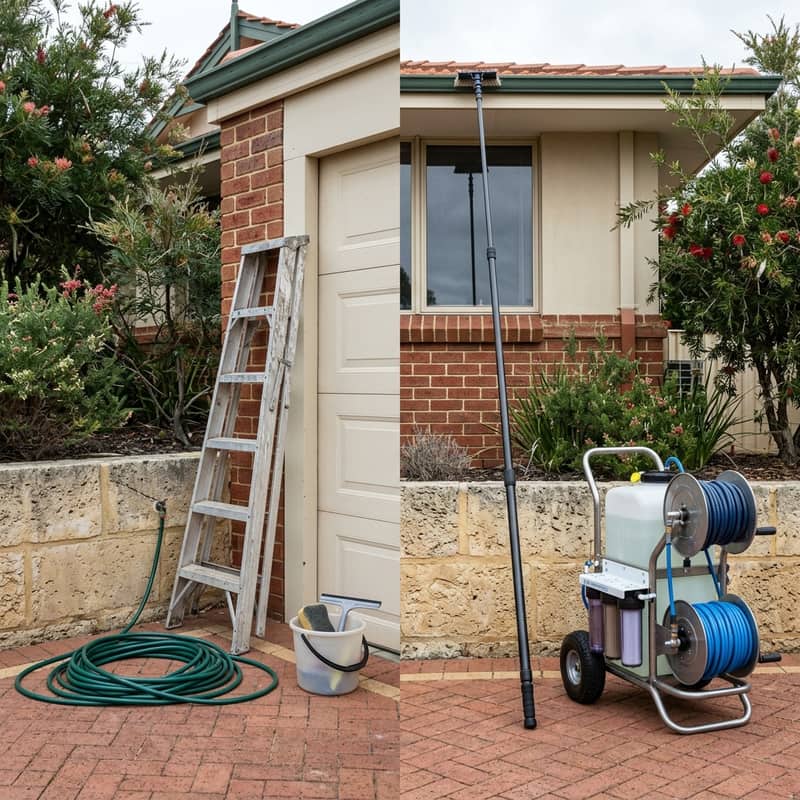
A professional residential solar clean in Perth costs a fraction of what you would lose if something went wrong with the DIY approach. Compare the cost of a professional clean against:
- Voided warranty replacement of damaged panels (thousands of dollars per panel)
- Permanent output loss from damaged anti-reflective coatings (hundreds of dollars per year for the life of the system)
- Insurance excess and medical costs from a roof fall (often thousands)
- Time spent doing the job poorly (3 to 4 hours vs zero hours of your time)
The maths is obvious when you lay it out properly. Professional cleaning is not just safer, it is cheaper over the lifetime of the system by a significant margin.
What Purified Group Does Differently
Every Purified Group residential clean uses ground-based pure water systems with telescopic water-fed poles. No one walks on your panels at any point during the job. No chemicals touch your roof or array. The pure water carries no minerals, so panels dry spot-free with output restored to factory specification.
We also work to roof safety standards on every job and carry full public liability insurance covering any accidental damage. If anything goes wrong on the job, you are fully protected by our coverage rather than your home insurance excess.
If you are about to climb a ladder with a sponge and a hose, stop and book a clean instead. Book a professional residential solar clean or request a free quote for your home today. Want to know more about how cleaning affects performance and your bill? Read our breakdown on whether dirty solar panels really hurt your power bill.
Frequently Asked Questions
Is DIY solar panel cleaning ever a reasonable option?
For a single-storey home with easy, safe ground access it can be attempted carefully, but the warranty and safety risks mean most homeowners are better served by a professional clean.
What's the biggest risk with DIY cleaning specifically?
Walking on the panels themselves, which most manufacturers explicitly warn against, since foot pressure can create micro-fractures in the cells that aren't visible but reduce long-term output.
Does a professional clean cost much more than doing it yourself?
The gap is smaller than most homeowners expect once you factor in equipment hire, the time involved, and the risk of a mistake that costs more to fix than the clean itself.