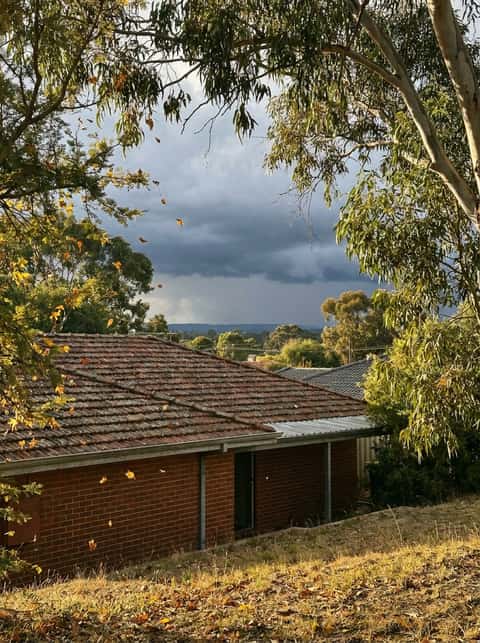
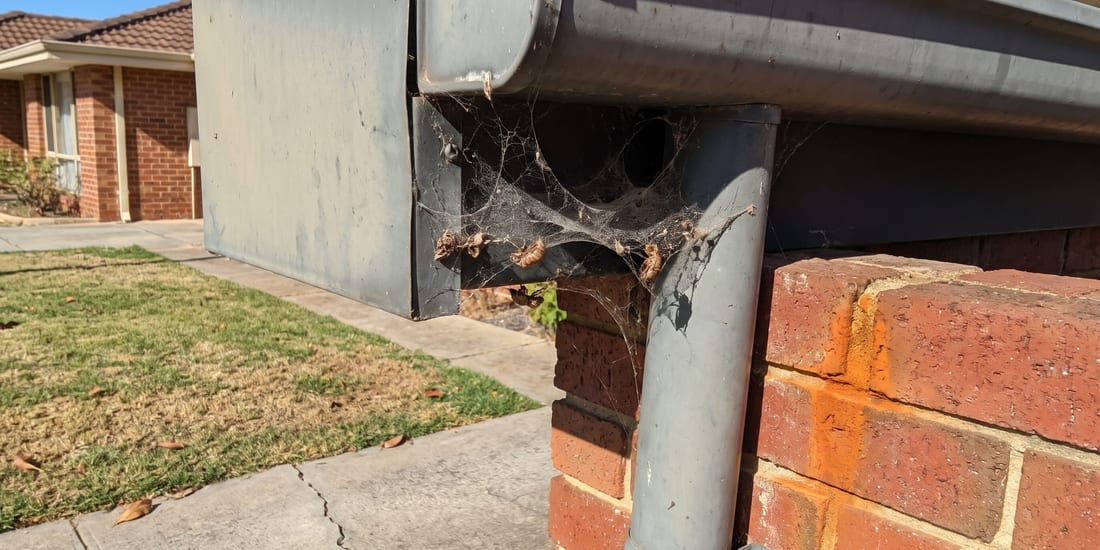
You walk out to put the bins out, glance up, and the whole run of eaves along one side of the house is draped in grey webbing. It catches the morning light, collects dust, and somehow it looks worse than it did a fortnight ago when you knocked it all down with a broom.
Cobwebs all over eaves and gutters is one of the most common exterior complaints Perth homeowners have, and the instinctive response is to reach for the pest spray. That is usually the wrong first move. Heavy webbing is far more useful as a diagnostic than as a pest problem. It tells you something about what is happening in your gutters and under your eaves. Treat it as information and you fix the cause. Treat it as a cosmetic nuisance and you will be back out there with the broom before the month is out.
Why Perth eaves and gutters are such good web real estate
Spiders build where three things line up: shelter from wind and rain, anchor points to attach silk to, and a reliable supply of flying insects. A Perth eave offers all three better than almost anywhere else on the property.
Start with shelter. The underside of an eave is a protected recess. It stays dry through winter rain, it is shaded through summer, and most of the year nothing disturbs it. In a climate with long dry stretches and strong afternoon sea breezes, a sheltered pocket like that is genuinely scarce.
Then the anchor points. Fascia boards, gutter brackets, downpipe straps, light fittings and the junction where a soffit meets the wall are all ideal silk attachments. Render and brick give plenty of texture to grip, and the corners where two surfaces meet at right angles suit the messy, sheet-style webs that end up looking so bad from the driveway.
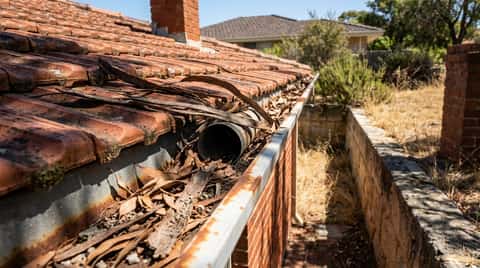
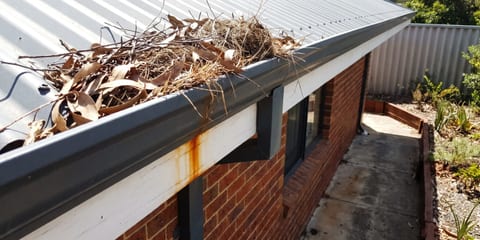
The third factor is the one most people miss. Spiders follow food. Insects are drawn to decomposing organic matter and to moisture, and both of those tend to accumulate in gutters. Jacaranda and peppermint leaf drop, Norfolk Island pine needles, bottlebrush flowers, bark, seed pods and the fine grit that blows in off dry summer soil all collect in the gutter channel. Once that layer gets damp, whether from a winter downpour or from reticulation spray hitting the wall, it begins to break down. Decomposing debris attracts midges, gnats and other small flying insects. Those insects attract spiders, and the spiders build directly above and beside the gutter line.
Perth’s climate amplifies all of this. Long dry periods mean debris sits and bakes rather than being flushed clear. Then a single heavy storm wets it through and you get a short, intense burst of insect activity. Add garden reticulation running through summer, often spraying close to walls, and you have localised humidity in an otherwise dry environment. That combination is exactly what sustains a heavy spider population around a house that is otherwise clean.
A few webs versus a warning sign
Not every cobweb means something is wrong. A single web spun overnight across a corner of the patio is normal. What is worth paying attention to is the pattern.
Webbing concentrated along the gutter line rather than evenly across the house. If the heaviest build-up follows the run of the gutter, especially near downpipe heads and internal corners, the gutters themselves are the draw.
Dense, layered, dusty webbing rather than fresh silk. Thick grey curtains that have trapped dirt, leaf fragments and insect casings have been there for months. That timeline usually matches the last time the gutters were cleared.
Webs on one elevation far worse than the others. This almost always points to a specific local cause: a tree overhanging that side, a reticulation head spraying the wall, a gutter section that does not drain properly and stays damp.
Return within weeks of clearing. This is the strongest signal. If you clear everything and it is back inside a month, you have removed the symptom and left the cause completely untouched.
Read together, heavy webbing along the eaves and gutter line is one of the earliest visible signs that your gutters have been accumulating debris for a while. It shows up well before overflowing gutters or staining down the wall, which makes it genuinely useful. That is also why webbing is worth checking as part of gutter cleaning before Perth’s storm season, when there is still time to act on what it is telling you.
What a proper clean removes that a broom pass does not
Swinging a broom along the eaves feels productive. The webs come down, the house looks tidier, and you have done something. But a broom and a garden hose address only the visible layer.
What gets left behind:
Egg sacs. Many web-building spiders tuck their egg sacs into the tightest available crevice: the gap behind a gutter bracket, the join between fascia and soffit, a weep hole, the recess around a downpipe strap. A broom sweeps across the surface and passes straight over them. Those sacs are the reason a cleared eave repopulates so quickly.
Anchoring debris. Webs are not built on clean surfaces. They are built on and around accumulated grime, dead insects, dust and leaf fragments that give the silk something to attach to. Knock down the web and the substrate remains, which makes the spot easier to rebuild on than a genuinely clean surface.
Staining residue. Long-standing webbing leaves marks. Trapped dust, insect debris and the silk itself leave grey or brown shadowing on render, painted fascia and soffit lining. A hose will not shift that, and a high-pressure blast at close range into render can make it worse by forcing dirt deeper. Removing the stain properly needs appropriate technique and detergent rather than brute force.
The actual cause. Most importantly, a broom pass does nothing about the gutter contents. The decomposing layer that is feeding the insect population that is feeding the spiders stays exactly where it is.
A proper gutter and eave clean works through the whole system: the gutters cleared out and flushed so debris and standing moisture are gone, downpipes checked for flow, eave recesses cleaned rather than just swept, crevices and fascia junctions treated, and the surfaces left clean enough that rebuilding is genuinely less attractive.
Where DIY is sensible and where it stops
There is a reasonable amount you can do safely from the ground.
An extendable cobweb brush on a telescopic pole handles single-storey eaves on level ground without a ladder, and that is the key safety line: both feet on the ground, no over-reaching. Work in dry conditions, because damp webbing smears rather than lifts. Do your verandah posts, window frames and the underside of the patio roof while you are at it. Trim back any shrub or branch touching the wall, since vegetation contact gives spiders a highway up and a steady insect supply.
Where it stops being sensible:
- Two-storey eaves. Reaching a second-storey soffit means a tall ladder, often on paving, lawn or a slope, with one hand holding a pole. That is a poor position to be in.
- Anything requiring lateral reach from a ladder. Over-reaching sideways from a ladder is a leading cause of serious falls around the home.
- Gutter work itself. Clearing a gutter properly means working along its full length at height and handling wet, heavy debris. It is not a side task to tack onto a cobweb sweep.
- Roof access. If the only way to reach the problem involves getting onto the roof, particularly a tiled or metal roof in Perth heat, stop.
If knocking down the webs is the only part you can reach safely and the gutters above them are untouched, you are maintaining the appearance while the cause continues.
Why they keep coming back
The cycle most people describe is the same: clear everything, enjoy two or three clean weeks, then watch the webs reappear in exactly the same spots.
Three things drive that, and they compound. The food supply is unchanged, because debris sitting in the gutter keeps breaking down and keeps attracting insects. The moisture is unchanged, whether that is a reticulation head spraying the wall, a gutter section holding water from poor fall or a partial blockage, or a dripping downpipe joint. In a dry climate, localised moisture concentrates insect activity rather than dispersing it. And the population is unchanged, because egg sacs left in crevices hatch and the next generation builds in the same favourable spots their parents chose.
Break one of those and you slow the cycle. Break all three in the same visit and the interval between visible build-ups stretches out considerably.
Fold it into a schedule rather than fighting it
The practical answer is to stop treating cobweb removal as a separate chore and treat it as one component of exterior maintenance.
For most Perth homes that means pairing eave and cobweb cleaning with gutter cleaning on the same schedule. Many properties suit twice a year: once after the bulk of autumn and winter leaf drop, and once before storm season so the gutters are clear going into the heaviest rain. Homes with significant tree cover, or those near the coast where wind-driven debris and salt grime accumulate faster, may need more frequent attention.
Done this way, each visit addresses the gutter contents, the downpipe flow, the eave surfaces and the crevices in one pass. Each one is also a chance to spot the specific local causes: a reticulation head aimed at the wall, a branch resting on the fascia, a gutter section that is not draining. Those are quick fixes once identified, and they reduce how hard the next clean needs to work.
If the webbing along your eaves has become a recurring job, or the gutters above it have not been cleared in a while, it is worth having both handled together. Purified Group’s Perth gutter cleaning covers the gutters, downpipes and surrounding eave surfaces as one job, so the cause and the symptom are dealt with in the same visit rather than one at a time.
Frequently Asked Questions
Are cobwebs on my eaves a sign of a spider infestation?
Usually not. Heavy webbing in eaves and gutter lines is far more often a sign that there is a reliable food supply and sheltered anchor points up there, which generally means organic debris and moisture sitting in the gutters. Clearing the debris removes the reason the webs keep appearing.
How often should cobwebs be removed from eaves in Perth?
Most homes do best with a full exterior sweep at the same frequency as gutter cleaning, which for many Perth properties means twice a year, with one visit timed before storm season. Homes under heavy tree cover or with reticulation spraying walls often need it more often.
Can I just hose the cobwebs off my eaves?
A hose knocks down visible webbing but leaves egg sacs tucked into fascia joints and weep holes, and it can drive dirt and staining residue further into render. It also pushes debris into gutters that may already be partly blocked.
Why do the cobwebs come back a few weeks after I clear them?
Because the conditions that attracted the spiders have not changed. Decomposing leaf litter in the gutters keeps drawing insects, and sheltered eave recesses stay dry and undisturbed, so new webs go up in the same spots within weeks.
Is it safe to clear cobwebs from a two-storey eave myself?
Working at that height from a ladder, often on uneven ground or paving, with one hand on a pole, is where most homeowner falls happen. Two-storey eaves and anything that requires leaning or over-reaching are better handled as part of a professional clean.