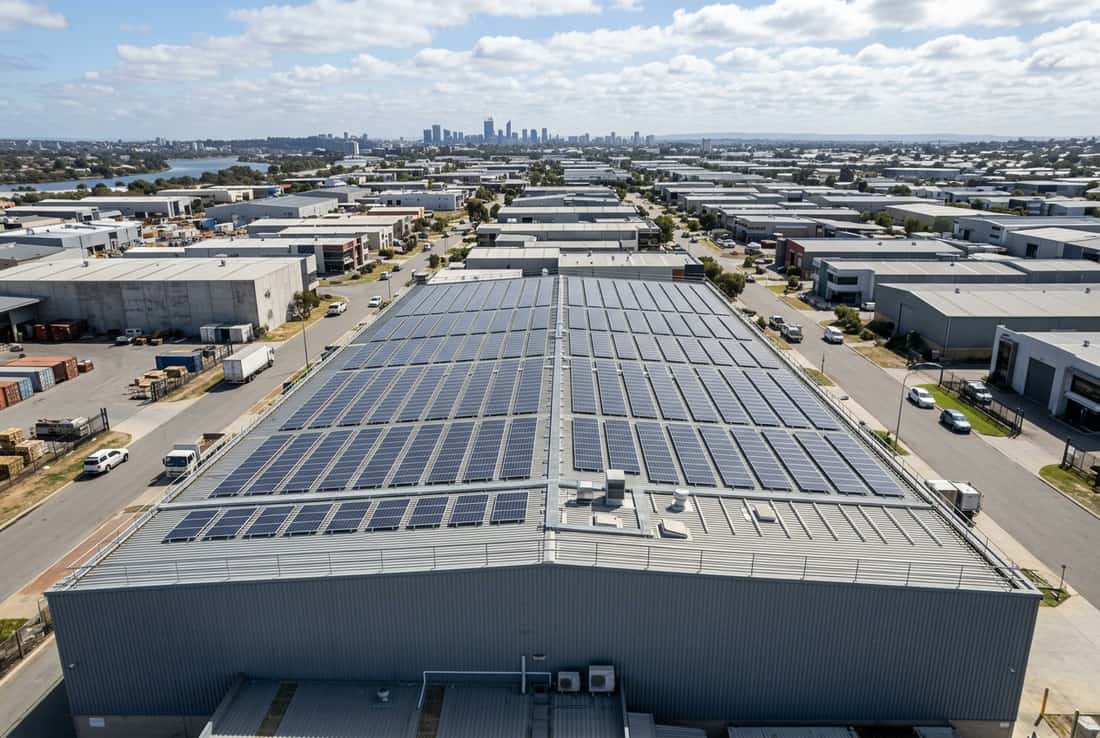
Perth industrial areas put different pressures on commercial solar arrays compared with quieter suburban or office locations. Businesses in places such as Welshpool, Bibra Lake, Jandakot, Henderson, and Canning Vale often deal with a mix of dust, transport activity, hardstand exposure, and general industrial residue that settles across the roof over time. Even when the business itself runs a tidy operation, the surrounding environment can still leave the panels looking dull and overdue for attention.
That is why commercial solar panel cleaning in industrial areas should be thought about as a site condition issue, not just a cosmetic extra. The roof is exposed to a harsher working environment, larger arrays are common, and build-up can happen gradually enough that managers do not notice how much the appearance of the system has slipped until the panels are already well past their best.
What makes industrial areas harder on solar panels
More airborne dust and residue
Industrial precincts tend to generate more fine dust and surface contamination than standard suburban settings. Traffic, yards, workshops, storage areas, and nearby activity all contribute to the environment the roof is sitting in every day.
Bigger roofs and broader exposure
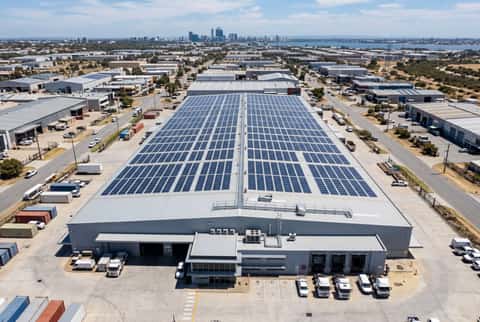
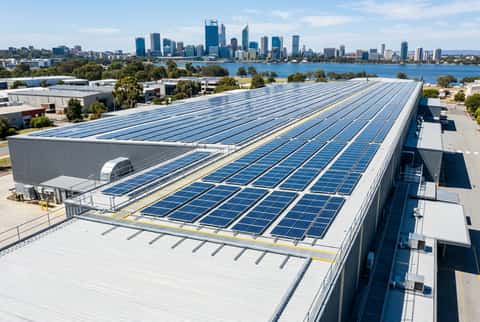
Industrial properties often have wide roof spans, which means the array is exposed across a larger surface area. That makes build-up more likely and harder to spot from ground level until it has become fairly obvious.
Heavier operational surroundings
The issue is not that every industrial site is dirty. It is that the wider surroundings create more opportunities for residue to settle and stay on the glass for long periods if the panels are not cleaned properly.
Patchiness becomes common
On industrial roofs, it is common for some sections to weather differently from others. That uneven look is another sign the site is facing conditions that need more deliberate cleaning.
Why industrial businesses should not rely on appearance from ground level
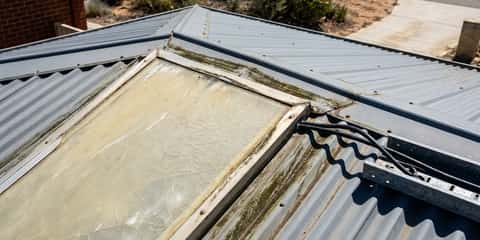
One of the biggest traps on industrial sites is assuming the roof must be acceptable because it is not clearly visible from below. In reality, many arrays look much worse from above or from neighbouring vantage points than they do from the yard or car park.
Because of that, industrial businesses are often better off judging solar panel cleaning by maintenance logic and exposure rather than by waiting until the dirt is obvious from the ground.
That approach is especially helpful on larger buildings where the array makes up a major portion of the roofline and the visual decline can be significant once it becomes noticeable.
It also stops the roof from becoming a forgotten asset simply because daily operations are understandably focused elsewhere.
What a smarter maintenance approach looks like
Treat cleaning as part of site upkeep
Industrial properties already understand the value of keeping operational assets in order. Solar panel cleaning should sit within that same mindset rather than being treated as optional until proven otherwise.
Match the schedule to the environment
High-exposure sites often need a more deliberate cleaning cycle than lower-exposure commercial properties. The right timing depends on the site, but the principle stays the same: the harsher the surroundings, the less sensible it is to leave the panels to chance.
Keep the property looking managed
A cleaner roof supports the image of a better-run industrial premises. That matters for staff, customers, suppliers, and anyone else interacting with the site.
Build a routine after the first clean
Once the array has had a proper reset, management can judge how quickly grime returns and create a more realistic repeat plan instead of working from assumptions.
Why local industrial area coverage matters
Purified Group has dedicated solar panel cleaning pages for Perth commercial and industrial areas including Welshpool, Bibra Lake, Jandakot, Henderson, and Canning Vale, alongside its broader Perth solar cleaning page. That local area coverage is useful because industrial sites are not all facing the same exposure. The best approach is one that reflects the conditions around the property and treats the roof as part of the wider maintenance picture.
For industrial businesses, waiting until the panels look obviously poor is rarely the best move. A planned clean protects the standard of the system and avoids letting the array become another neglected roof surface. In practical terms, a smarter cleaning routine helps industrial roofs look more controlled and more in step with the wider site.
Why industrial environments need a more deliberate plan
Industrial roofs often work harder than they look. They sit above operations that can generate dust, movement, and residue every day. That is why the maintenance approach usually needs to be firmer and more deliberate than it would be on a quieter commercial property.
Industrial environments need a more deliberate commercial cleaning plan
If your business operates in one of Perth’s industrial areas, your solar panels are likely dealing with tougher conditions than a quieter commercial roof. A proper cleaning schedule helps keep the array cleaner, smarter, and more in step with the site.
See Commercial Solar Panel Cleaning for wider service details or return to the Purified Group homepage. For industrial-area pages, start with Welshpool, Bibra Lake, or Canning Vale.
What industrial businesses often gain from a proper cleaning routine
A planned cleaning routine gives industrial sites more control. Instead of reacting only when the roof becomes obviously poor, management can decide on timing that suits site access, trading patterns, and maintenance windows. That reduces disruption and makes the work feel like part of normal operations rather than a sudden inconvenience.
There is also a presentation benefit. Industrial properties may not be trying to look polished in the same way as an office building, but they still benefit from appearing organised and well maintained. Cleaner solar panels support that impression and help the site look more under control from top to bottom.
Over time, that kind of consistency usually makes decisions easier. Once the business knows how quickly grime returns in its particular environment, the maintenance schedule stops being guesswork and becomes part of a repeatable routine.
Frequently Asked Questions
Why is industrial precinct fouling worse than elsewhere in Perth?
Freight traffic, construction dust and manufacturing activity all contribute particulate that settles on rooftop arrays faster than in purely residential or retail areas, which is why industrial sites often need a shorter cleaning interval.
Do you service all of Perth's industrial precincts?
Yes, Purified Group covers all 14 major Perth commercial precincts including Malaga, Welshpool, Canning Vale, Bibra Lake, Henderson, Kwinana and the surrounding industrial corridors.
Is a pre-clean inspection always included?
Yes, every commercial solar job starts with a visual inspection checking for panel damage, mounting issues and soiling severity before any cleaning begins, at no extra cost.